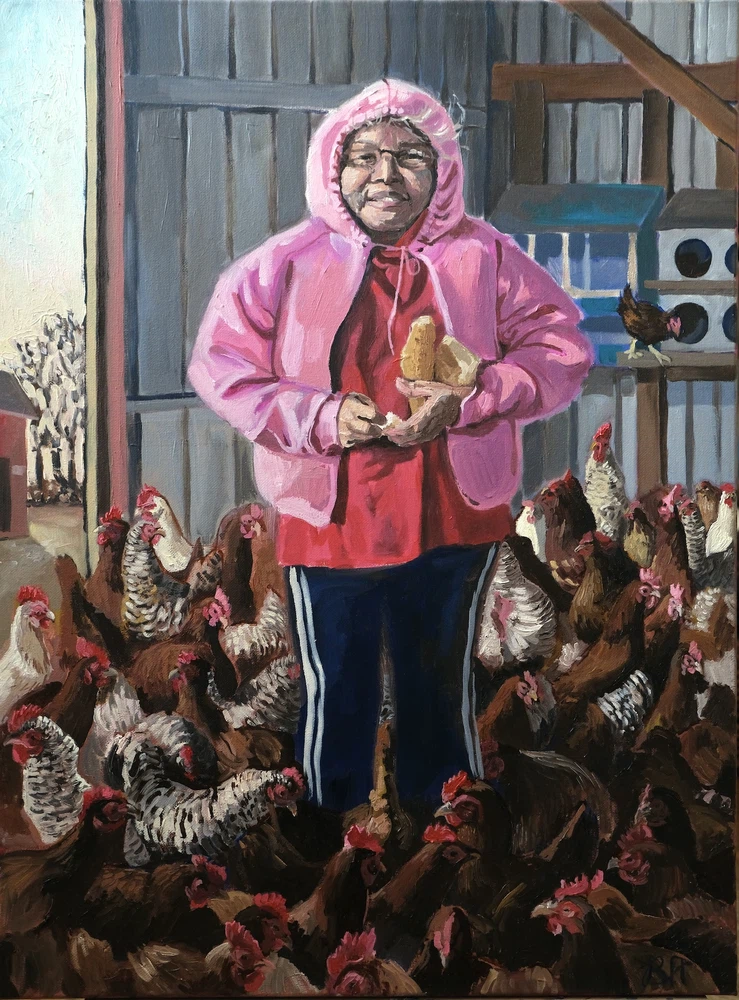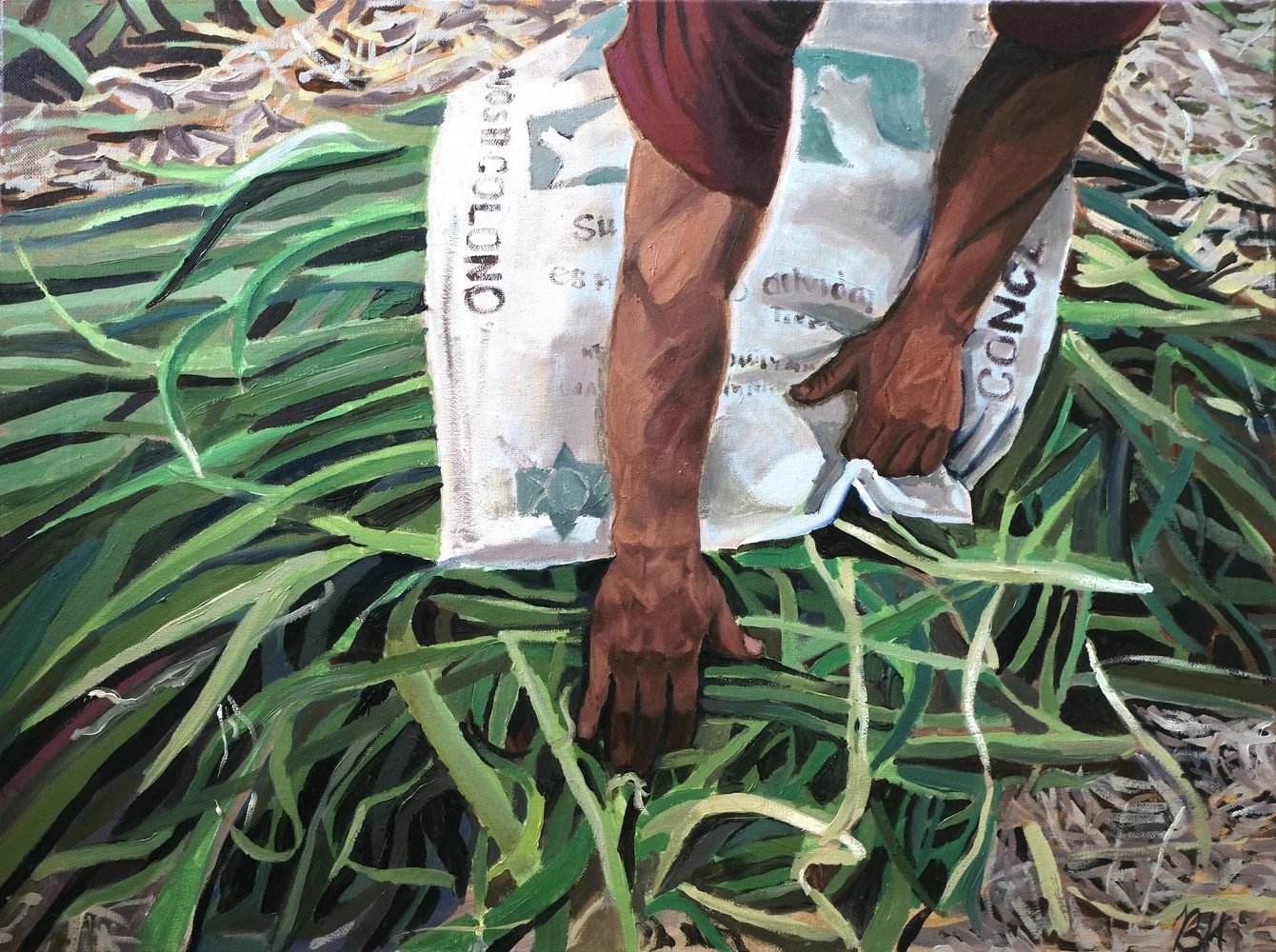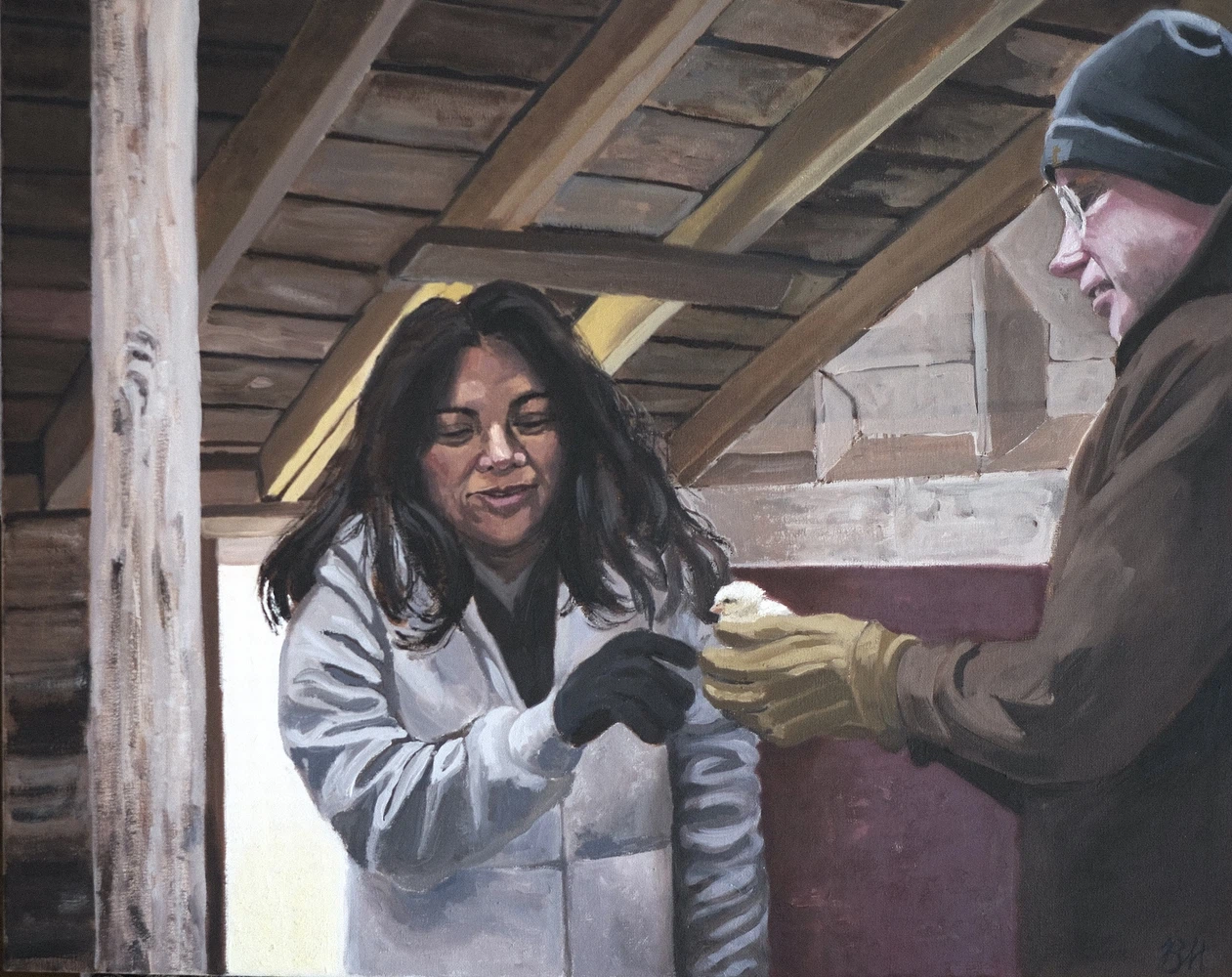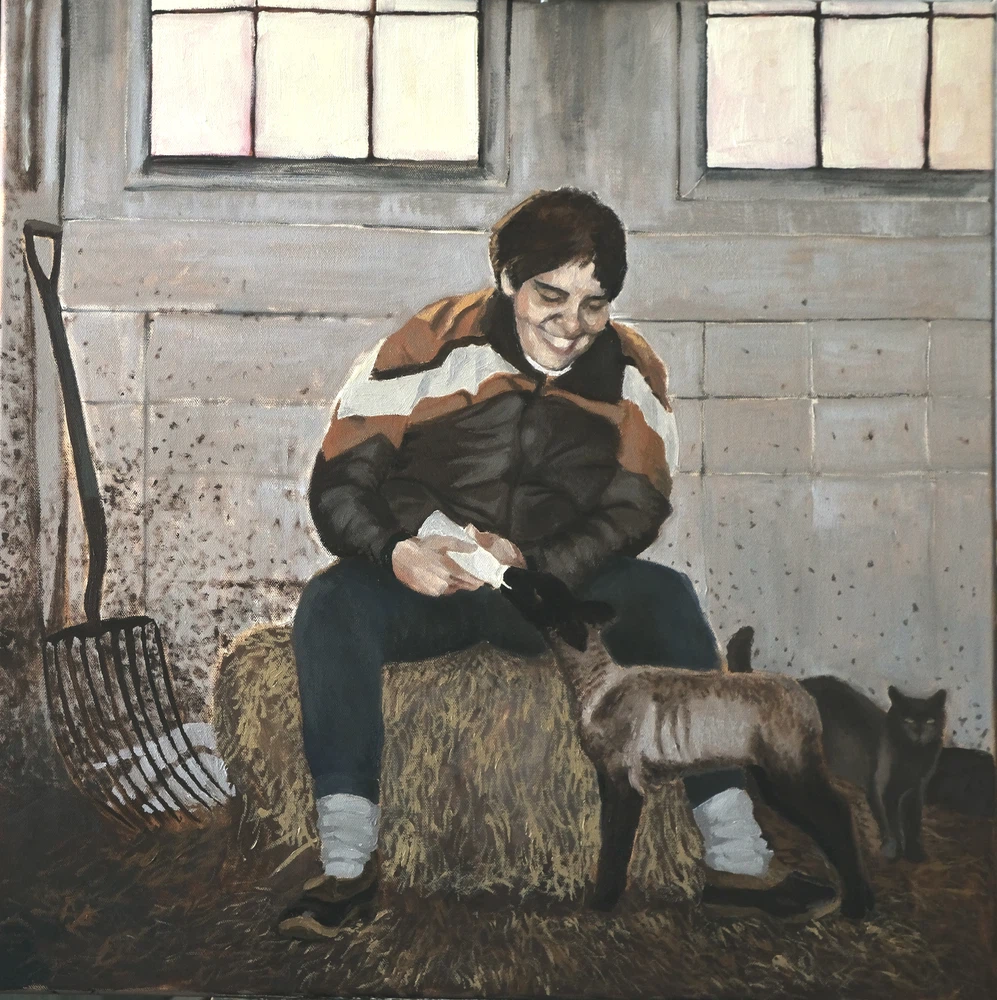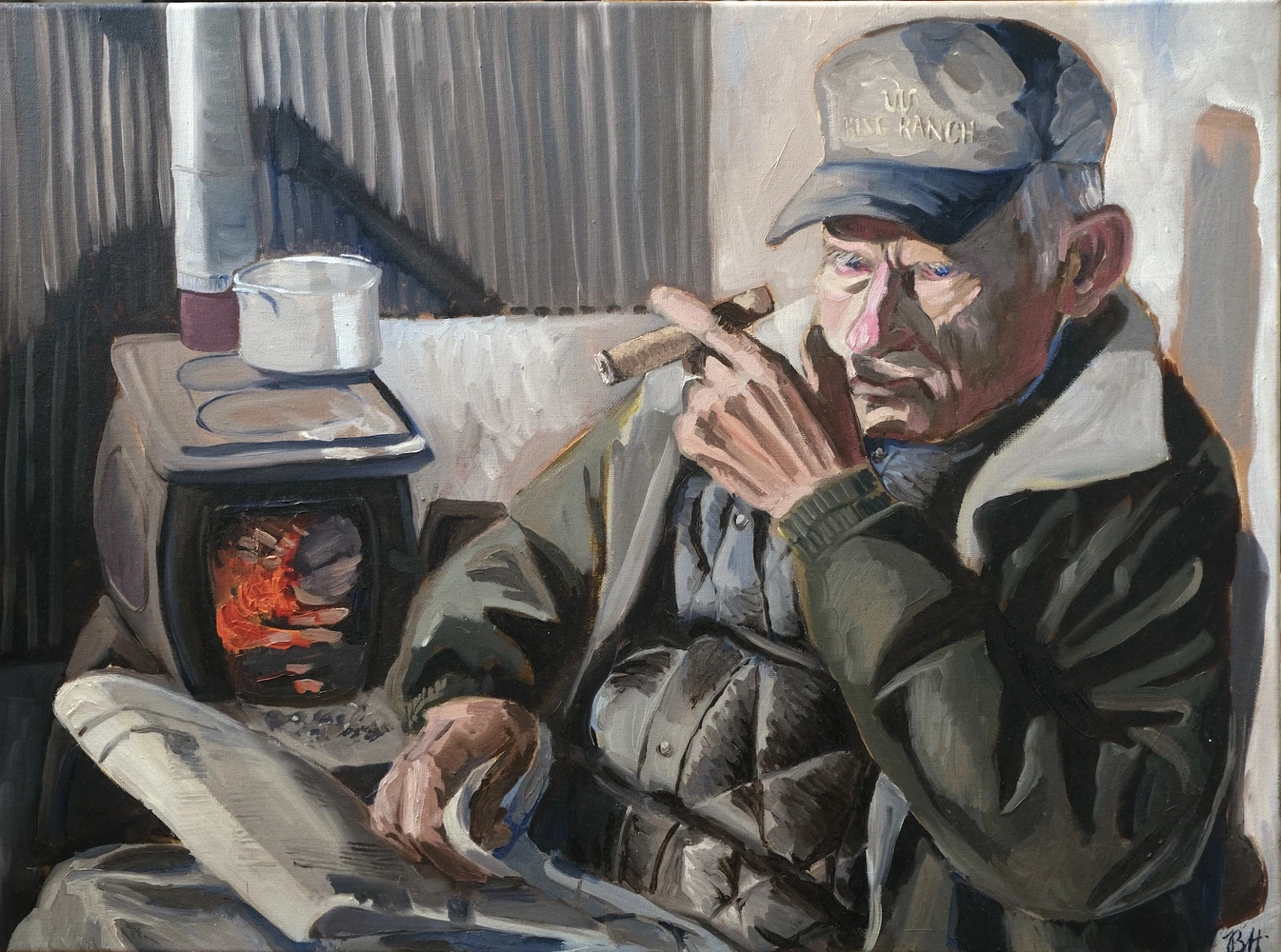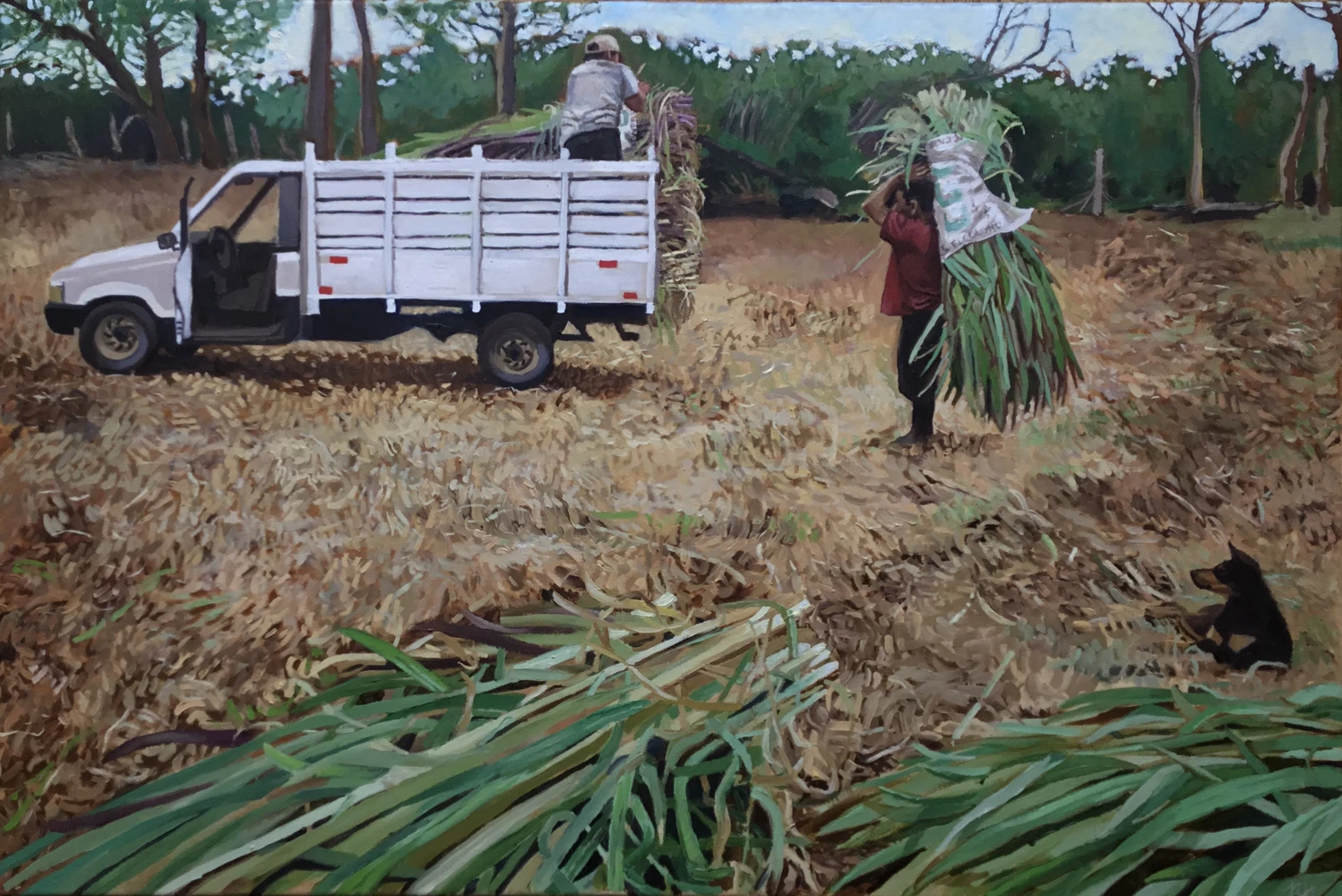
This series of paintings came out of reflections on the novels, essays and poems of Wendell Berry. In Berry's book Andy Catlett: Early Travels, Andy reflects back on the “great knowledge,” possessed by those who lived close to the land and the “great forgetfulness” of life fueled by a consumerist, industrial economy: “the old world, in which our people lived by the work of their hands, close to weather and earth, plants and animals, was the true world. And the new world of cheap energy and ever cheaper money, honored greed and dreams of liberation from every restraint, is mostly theater.”2 Berry reminds us that we are people made of earth, made to work in the soil. To imagine that we could progress beyond that requires a forgetfulness of what human beings are and a forgetfulness of the Creator. As the psalmist writes,
When I look at your heavens, the work of your fingers, the moon and the stars, which you have set in place, what is man that you are mindful of him, and the son of man that you care for him? Yet you have made him a little lower than the heavenly beings and crowned him with glory and honor. You have given him dominion over the works of your hands; you have put all things under his feet, all sheep and oxen, and also the beasts of the field, the birds of the heavens, and the fish of the sea, whatever passes along the paths of the seas. O Lord, our Lord, how majestic is your name in all the earth! (Ps 8:3– 9 ESV)
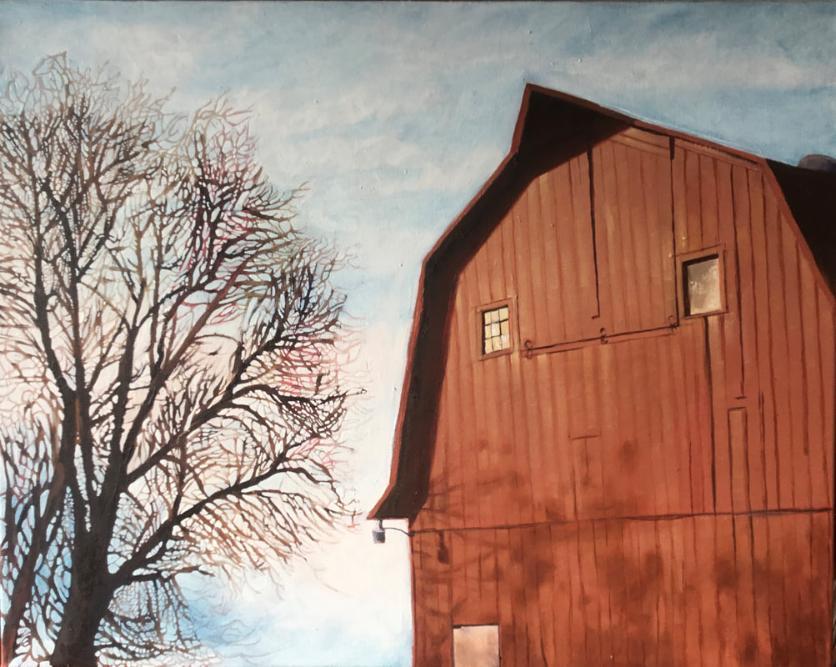
Dr. Akshit Puri, a soil scientist at the Kwantlen Polytechnic University farm program that I am participating in, taught us that a single teaspoon of soil contains more microbes than there are stars in the universe! Matt Johnson, our farm school teacher, taught us that there are over 20,000 cultivars of tomato in the world, all with different flavours, textures, aromas, and colours! The earth is bursting with life and God has appointed human beings to tend and steward it. It is a high and humbling calling indeed!
One of my most humbling experiences was interning for a month on a sustainable dairy farm. The farm hand that I worked with almost never spoke, and if he did, he spoke with an economy of words that allowed him only one or two at a time. Anything more would have been a waste of time and resources. My internship training consisted in following him around the farm silently struggling to copy what he was doing—and failing miserably. He deftly hand-milked ten cows and moved on to other chores leaving me to finish milking the one poor patient beast I’d been milking since he started. My forearms ached for days. He called the calves in for feeding time with a song and spoke to his horse with clicks and pressure of heels and hands to expertly guide her up mountains and round up cattle, while I desperately tried to follow him and remain seated atop a horse that was determined to scrape me off with low-hanging branches. When I managed to heroically fight my way through the branches and twigs feeling something like an Arthurian knight fending off my foes, I realized he was waiting on the other side, watching and laughing, without a word. After an hour of pushing cow patties around the barn, I can hardly describe the feeling of pride and accomplishment I felt when I finally got the speed and force just right to slide the shovel under the manure pile. I had to laugh at myself then. And while he gracefully loaded bundles of razor-edge grass into old coffee bags and lifted them to his shoulder with one fluid movement, before swinging them cleanly into the back of the truck, I struggled to copy him with my own awkward and inefficient attempts like a kid in ballet.
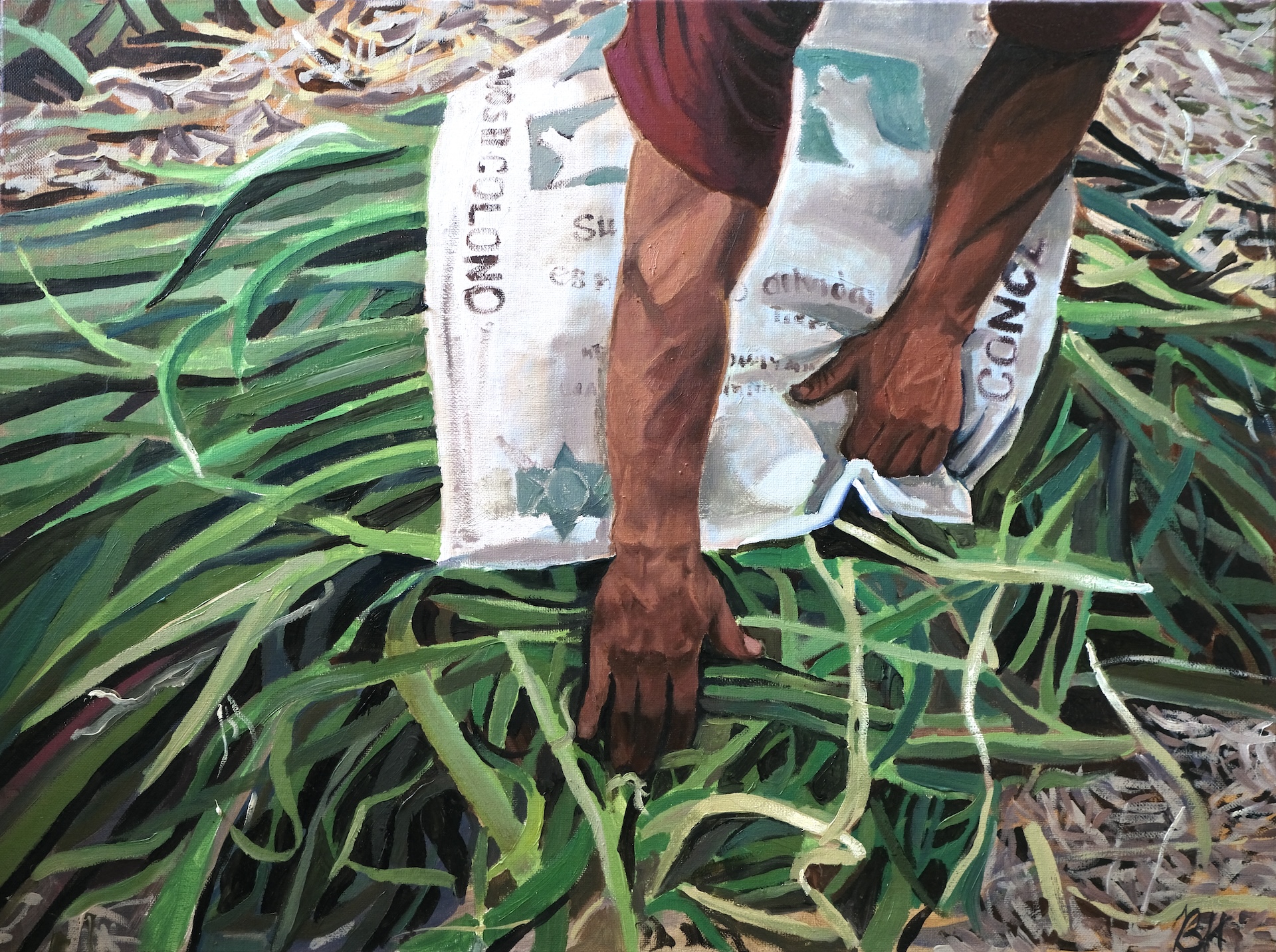
"Every man is called to give love to the work of his hands"4
That internship was my firsthand experience of what Wendell Berry describes in his short story, "The Art of Loading Brush." In that story, Andy Catlett, a character from Berry’s Port William novels, is aging, and hires some young men to repair a fence, who then make an absolute mess of the job. To clean up after them, he hires Austin Page, “a boy not farm-raised but interested in farming.”5 Austin is eager to help load the leftover brush onto Andy’s wagon. He tosses a limb onto the wagon “with a young athlete’s depreciating nonchalance,” launching Andy into a teaching moment about the art of loading brush: “‘That’s the way we do it. We pick up every piece and look at it and put it on the load in the place where it belongs.
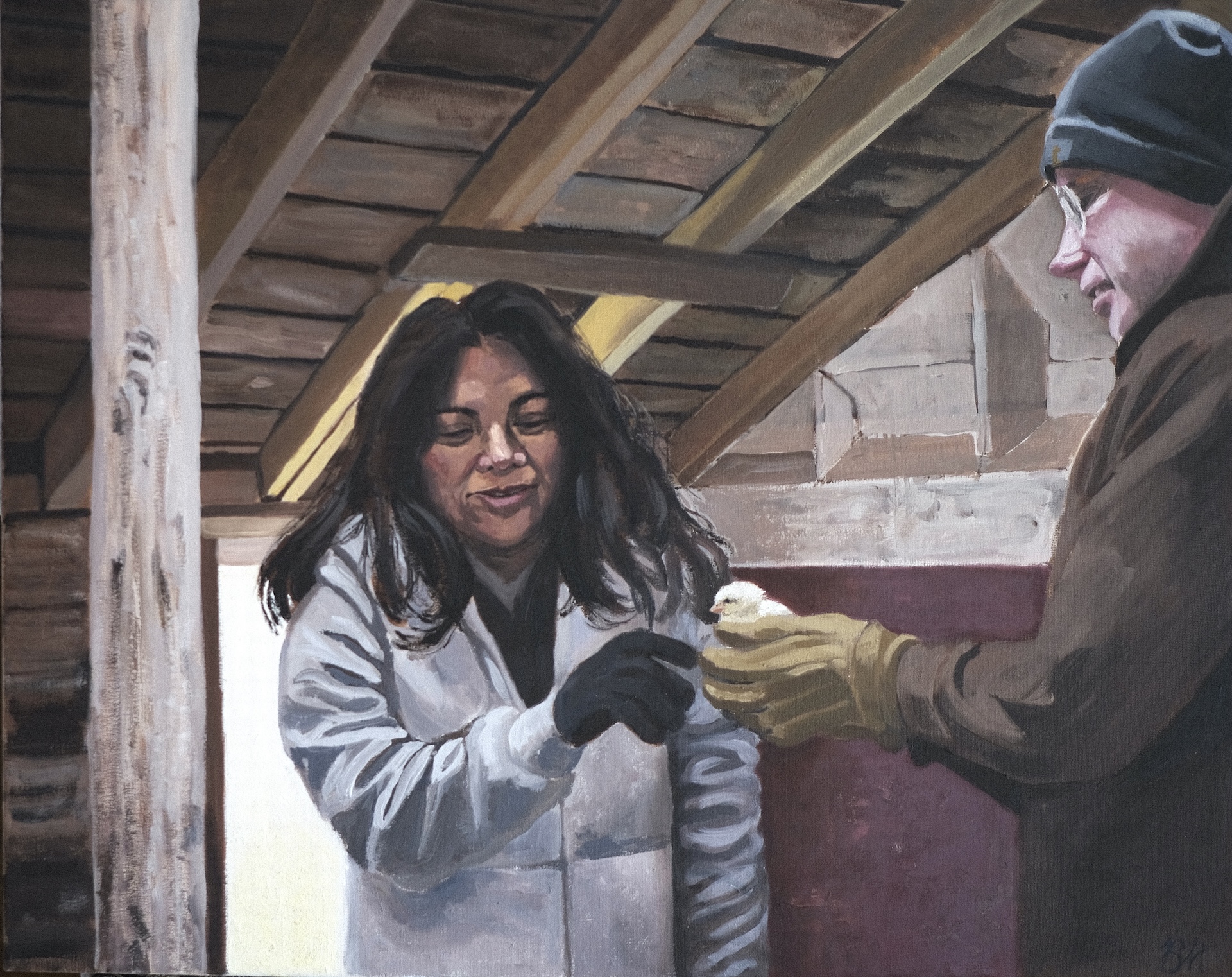
“It all turns on affection”6
We think of the shape of every limb and stem and chunk and pole, and that’s the way we shape the load. It’s the use of the mind, [...] what they ought to be teaching you in school’”7 After getting into the rhythm, Andy declares, “Now...we’re practicing the art of loading brush... Now I know about your ‘fine arts,’ your music and literature and all that–I’ve been to school too–and I’m telling you they’re optional. The art of loading brush is not optional.”8 When Austin, whose mind is “kindled by symphonies,” starts to understand Andy’s point, Andy goes on: “My dear Austin, my good boy, maybe it’s possible to blow things up and burn things down and tear things down and throw things away and make music all at the same time. Some, it looks like, think you can.
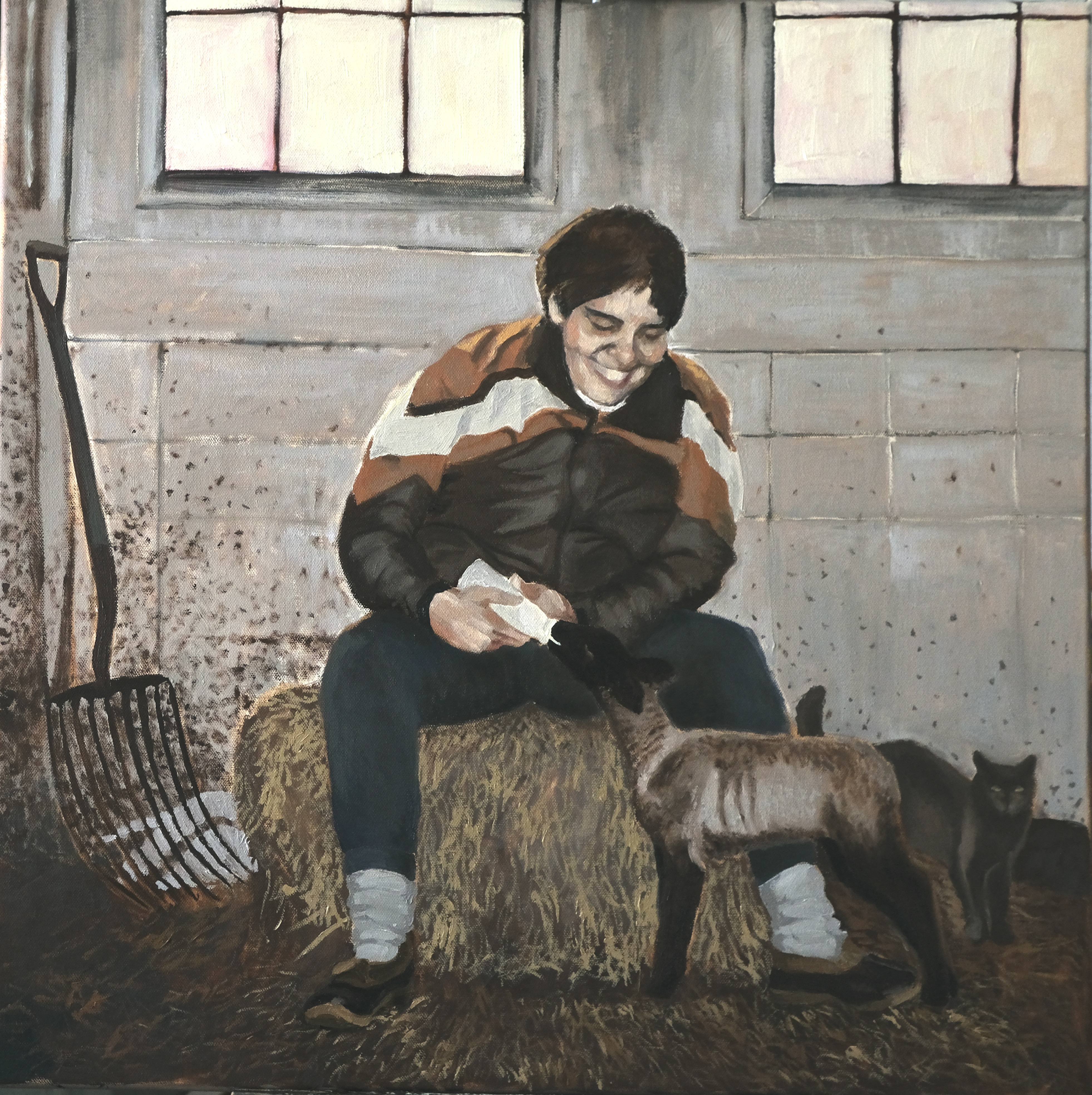
“The shepherd finding in himself/ the world’s tenderness deeply/ planted, sorrow always/ that even the least should be lost”9
But: if you don’t have people, a lot of people, whose hands can make order out of whatever they pick up, you’re going to be shit out of luck. And in my opinion, if the art of loading brush dies out, the art of making music finally will die out too.”10 As someone whose mind is “kindled” with art myself, I am as confronted by Andy Catlett’s pronouncement as Austin is in the story. But I recognize that culture, from the “highest” culture of art to the “lowest” culture of farming, depends on a creation that is artfully ordered by a Creator. God created humans to “work and take care” of the garden he planted. God gave us rhythms of rest and work in order that we might know him. If culture becomes dissonant with the Creator’s order, perhaps Andy is right: we’ll be “shit out of luck.”
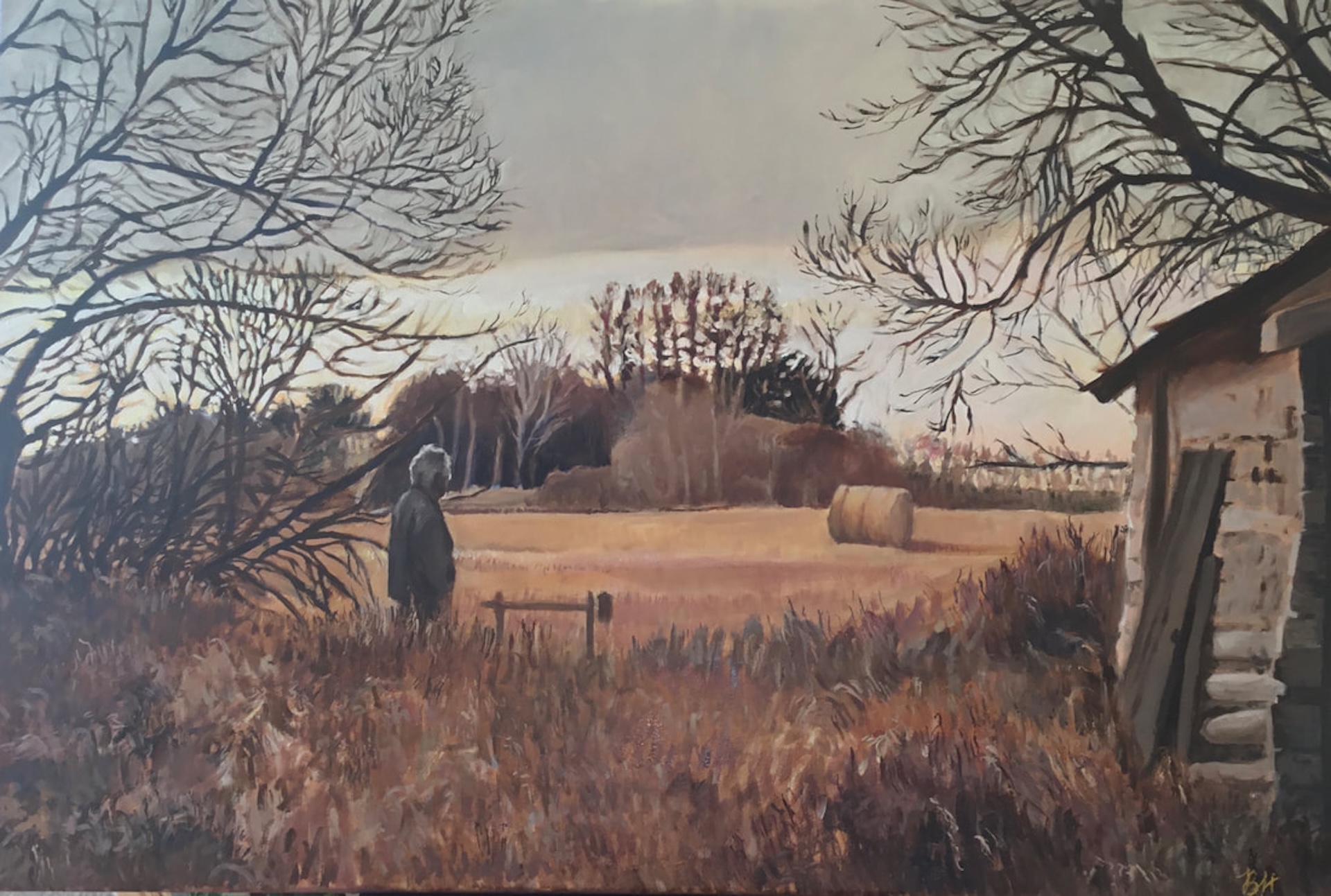
“A Sabbath, profound and bright”11
Thankfully, my teacher at the farm program gives more verbal explanation than I received in my previous internship. Yet, many things in farming require a method and rhythm that is gained only through practice and time. In a class on orchard maintenance, we watched an orchardist who has tended orchards for fifty years prune a pear tree. Though there are some basics and guidelines, to expertly prune a tree requires knowing how each tree will grow season after season, year after year, and how the cuts the orchardist makes will work alongside the growing tree and not against it. As he began making cuts as expertly as an artist applies paint to their canvas, his explanations grew shorter and his hands grew louder. “I don’t make any cuts right away. I spend a lot of time just looking at a tree, considering how it will grow,” he explained. The process is much like the art of loading brush: “We pick up every piece and look at it and put it on the load in the place where it belongs. We think of the shape of every limb and stem and chunk and pole, and that’s the way we shape the load.” The art of loading brush and pruning trees grounds me to approach my vocation as an artist with the same kind of care, labor, humility, and tenderness. These paintings portray glimpses of God’s order of love and commitment to his creation.