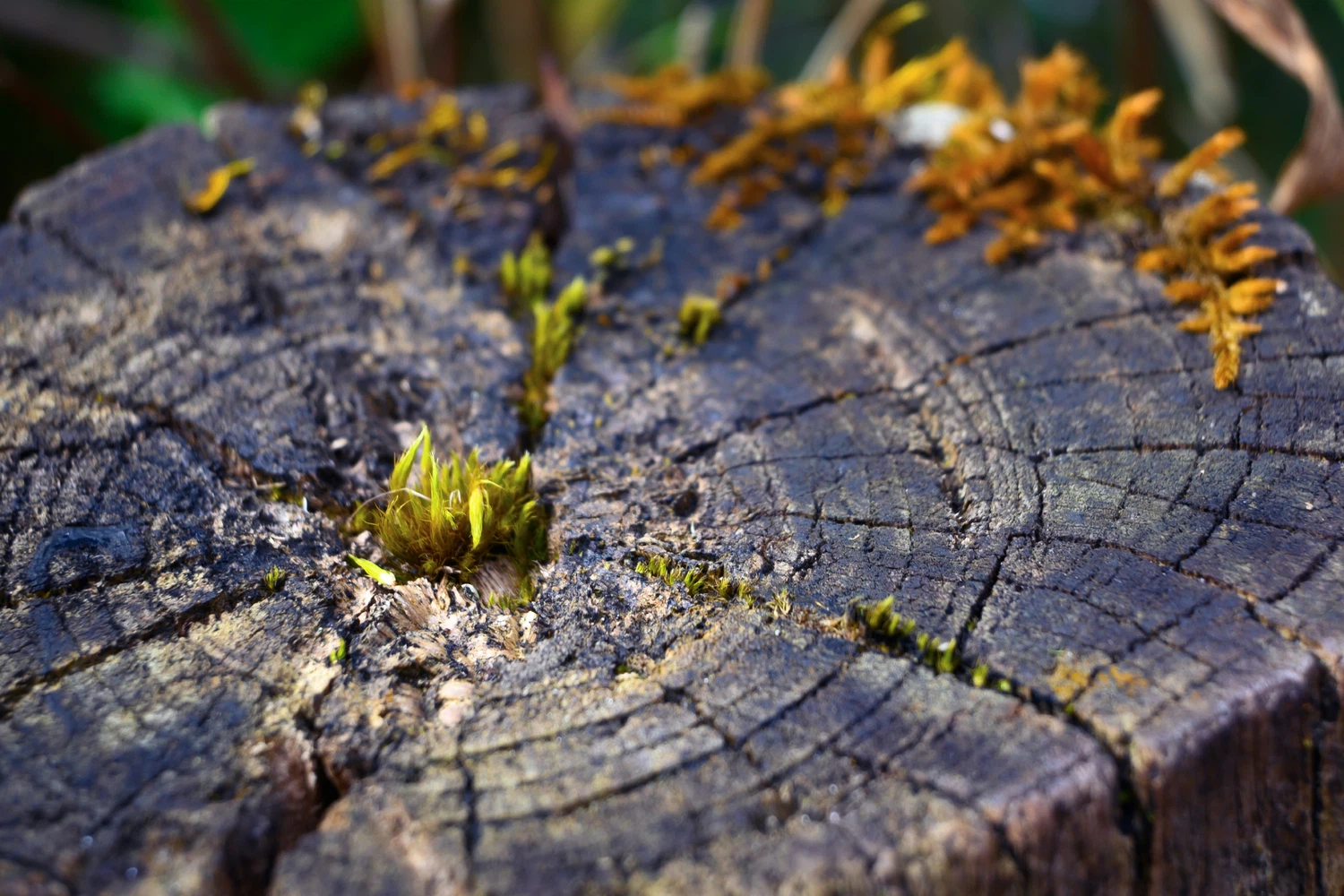
Late one Friday afternoon in July 2025, my Regent ecotheology seminar stepped out of our second-floor classroom and spread ourselves around the atrium’s railing. That day, preparations were underway for a reception honouring the new Bruce K. Waltke Chair of Old Testament Studies, and several people below paused to listen. Regent is full of surprises, though, so no one was especially shocked to hear us simultaneously blessing the space and wrapping our course with a shared reading of Wendell Berry’s poem, “A Vision.”
As many Vine readers will know, Berry died this August 31 at age 92. Equal parts farmer and writer, he was among those relatively rare literary artists who achieve wide critical acclaim while drawing deeply on theological roots. Like many poets and fiction writers read often at Regent—Gerard Manley Hopkins, the Inklings, Flannery O’Connor, Walker Percy, Denise Levertov, Marilynne Robinson, Malcolm Guite, to name a few—he cut a unique figure. Central to Berry’s particular charm and wisdom was a profound commitment to a specific place, his family farm in Kentucky. Some might call him cantankerous given their difficulty reaching him, much less attracting him for a reading or interview, but he epitomized groundedness. Phone calls could wait, emails barely existed; animals and fences needed tending, his wife of 69 years and their rural neighbours needed him more.
While Berry was probably best known for his “Mad Farmer” poems, in my nearly two decades at a Midwestern US regional state university, I have more often assigned his 1994 talk turned essay, “Health is Membership.” Long before COVID-19, it confronted the excesses of American individualism, arguing instead for embracing a profound interdependence. That essay’s primary context is our absurd for-profit health care system, but the same spirit is at work in the nearly 50-year-old poem my students and I read aloud. Often anthologized, “A Vision” could be called “A Manifesto” as easily as another famous Berry poem. Its lines are for anyone and everyone, whatever their way of being in the world, and it poignantly encapsulated our learning journey.
This short essay aims to honor Berry’s memory with an interpretive reading in which I explain why it fit our course’s conclusion. While I will concentrate on the opening ten lines and the concluding twelve—themselves continuations of a larger whole1—I hope Vine readers may be moved to ponder even more of it. Most importantly, I hope these thoughts cultivate fresh desire for and bulwark long commitment to lives that not just sustainably but abundantly serve the rest of creation. Personally, I return to “A Vision” in particular in light of humanity’s self-destructive fossil fuel dependency and still-expanding greenhouse gas emissions, a pattern that also deeply concerned Berry. Indeed he welcomed the poem’s republication in African American scientist-activist Ayana Elizabeth Johnson’s resolute (and recommended!) 2024 collection, What If We Get It Right? Visions of Climate Futures. But he first published these lines in the 1970s, when environmentalism was identified as much with conservative as liberal voices, when wild-eyed socialists like President Richard Nixon were passing a Clean Air Act and creating an Environmental Protection Agency—a U.S. governmental office that presently seems far more intent on eliminating than enforcing reasonable regulations.
I also write this as a fellow traveller who loves not just our shared home, but arts that illuminate it. For me, Berry’s poem constitutes another literary call to fight the “long defeat,” the same endless battle recognizable to anyone who has joined Tolkien’s fellowship and retreated to their own Helm’s Deep. Alongside the anonymous soldiers and families of Rohan, many of us today can find ourselves shaking with fear, perhaps angry that it has come to this. We who feel the groans of creation, who lament irresponsible addictions to extraction and consumption, also long for Gandalf’s sunrise return on the fifth day. The timeline in “A Vision” is less specific, but no less committed to defiant endurance. It looks forward to Merry and Pippin rediscovering their beloved Longbottom Leaf, but it knows that no matter how many assaults we weather, more battles will likely remain.
That context established, let’s dig in. Berry offers immensely hopeful words, but they are not blithely hopeful. They are soberly hopeful, and this posture is crucial to their power. The hope here is of the variety that St Andrews philosopher Mara van der Lugt offers in her counterintuitively-titled Hopeful Pessimism (Princeton, 2025), the unseen and therefore risk-taking kind I take Hebrews to be on about. Whether we use her term or Kim Stanley Robinson’s “angry hope” or some other counterintuitive combination, such a stance takes human depravity with full seriousness, especially the systemic effects. Nevertheless, it holds onto a vision of fresh life and revivification, not by magically waving away scars, but by treating them with honor, even as opportunities. So “A Vision” begins:
If we will have the wisdom to survive,
to stand like slow-growing trees
on a ruined place, renewing, enriching it,
if we will make our seasons welcome here,
asking not too much of earth or heaven,
then [. . .]
Since both “if” statements with which the speaker starts are tied to a subsequent “then,” we must immediately consider the causal relationship. To be clear up front, this poem is not about whether God loves us or our planet. There can be no room for conditionality there. However, “A Vision” does have something somber to say about the conditions under which our species and our civilizations may not just “survive,” but eventually thrive. The poem does not baptize the status quo, but directly confronts our habits of uncreation and their growing costs, pointing out how much genuinely depends on human agency.
With that caveat clear, once Berry’s speaker asks if we will “have the wisdom to survive,” he recommends we emulate not eagles, lions, or killer whales, but . . . trees? Yes, we are “to stand like slow-growing trees / on a ruined place, renewing, enriching it.” To have wisdom is a difficult charge, as possession or ownership are highly relative terms for beings who usually live less than a century. Even common hardwoods and pines double or triple that total, while olives, oaks, and redwoods routinely live one to five thousand years. Like Tolkien’s Ents, they aren’t especially worried about accelerating growth. From the outset, Berry gainsays the endless expansion idealized by Big Tech and Wall Street alike. He wants hardiness, not hurriedness.
Berry’s first condition also asks us to purposefully inhabit “ruined place[s],” both on local and global levels. This necessity may feel hard to grasp while gazing across the North Shore Mountains or the Strait of Georgia during a sunset ferry ride: we still see enormous beauty, real glory. Nonetheless, we need not look hard across the places we love to find devastating consequences of expanding heatwaves, wildfires, coastal and inland flooding, and polar vortexes. Earth has always had storms, but they are now multiplied to new extremes by runaway carbon dioxide and methane emissions and resultant ocean and land warming. “A Vision” is clear: approaching the glorious, redemptive years later in the poem will require looking much harder at human action now. Saruman’s orcs have already been busy turning verdant places of organic life into fiery hellscapes of extraction. Standing against their onslaught means joining Frodo at the Mirror of Galadriel and facing the possibility of Mordor overwhelming our various Shires.
The poem’s second condition for transformation is that we move beyond intellectual understanding into embodied response. The verb choice here, “welcome,” is provocative: like a certain unmarried young woman from Galilee two millennia ago, we must stretch the limits of our hospitality. Our guest may be small and vulnerable, a very specific being desperate for basic nourishment, but it also can be more abstract, like the seasons. In my Iowa and Illinois ramblings, people still commonly extol the ideas of spring and fall, but there are growing laments about blizzards in April and heat waves in October. Berry does not waver, though: we must “make our seasons welcome here,” not asking “too much of earth or heaven.” Use our eyes, ears, noses, taste buds, and nerve endings on every part of our bodies, that is, both to sense and limit the world’s growing chaos. What this means in specific cases will be as diverse as human cultures, but whatever else “A Vision” teaches, we are to work with creation and its seasons, not against them. I doubt whether it qualifies to emit thousands of pounds of heat-trapping gases while flying out-of-season fruit across continents. And expecting to live at a rate of consumption many times that of the average Global Southerner, as the average American or Canadian does, probably asks a bit much of God and creation both, no?
These are not easy realities, nor are there any simple, failsafe, silver-bullet routes to facing them. We are all complicit in “ruin,” no matter our efforts. The great thing about “A Vision,” though, is that it’s an invitation, and it foregrounds other kinds of fruit that we really need. Our responses will differ according to generation, geographic setting, and other factors, but if we can find some arboreal stability and welcome the varying seasons of our lives with all of their increasingly erratic behavior, we will find reason for sober hopefulness.
We may even intuit that this is always the way of things in apocalyptic periods of transition and unveiling. Do you ever pause over Genesis 6-9—not just Daniel or Revelation—and seriously ponder the utter devastation it implies, just offstage from Noah’s choices and the concluding rainbow? Whatever geographic scale we take Noah’s flood to reference, anyone who has suffered large-scale ecological disasters knows the feeling of how slowly the waters recede and “normal” life returns. Certainly, spaces that humanity abandons often surprise us with the pace of their rewilding, but we must not pretend a two-foot sapling can absorb anything like the carbon uptake of old growth. Neither the Noahic covenant nor “A Vision” offer a quick fix, and their subtexts involve extensive suffering. And yet there is still good news, if we have ears to hear:
then a long time after we are dead
the lives our lives prepare will live
here, their houses strongly placed
upon the valley sides, fields and gardens
rich in the windows.
“Welcoming seasons,” we now see, is possible if we love not just our present neighbours, families, churches, and other communities, but also their descendants. This is a whole new level of “pro-life” position. Only as we value “the lives our lives prepare” can a promise about their strong houses and rich gardens truly motivate us. We have to see ourselves as them, refusing narcissistic questions about so-called fairness. Otherwise, when we hear, “The river will run / clear, as we will never know it,” the grief will be too great to bear. It may even become denialism. This is a curious but constantly demonstrated psychological capacity: when humans hear too much about dangers and not enough about potential remedies, we often choose to pretend we never understood the threats in the first place. We don’t like feeling helpless.
Especially for those with public callings to not-necessarily-popular truth-telling, this is especially crucial. We must take the time to explore plausible and numerous possible solutions, not just seek conviction about wrongs. Of course this requires the wisdom with which Berry begins, the commitment to lives that enrich all of creation and resist endless exploitation. And this is where the poem’s circular movement joins its linear causality, where Loren Wilkinson’s foundational reorientation in The Circle and the Cross (Wipf and Stock, 2023) comes into play. Holding together science’s good gifts in illuminating material causality with storytelling’s best capacities to reframe the oldest of stories, his book explicitly names the kenosis at the heart of “A Vision.” Berry’s speaker may not directly name the Christ in whom all things hold together, but the poem’s remaining lines are very much a call to walk in his footsteps.
For brevity’s sake, I am fast-forwarding now through much of this poem’s body, but anyone who has come this far should encounter the whole. Again, a full two-thirds of “A Vision” does not emphasize our marred land and polluted seas, but winsomely appeals to Berry’s future conditional reality, the one full of birdsong and human music alike. The way of being it finds among our could-be progeny is of course highly dependent upon present steps—even if they are halting, incomplete, and resisted—but it is driven by love of the Shire, not fear of Mordor. It is only envisioned joy in “green meadows,” “the old forest,” and “forgotten springs” that will motivate human beings to “take / nothing from the ground they will not return.” Which brings us to the final dozen lines’ testimony:
In their voices they will hear a music
risen out of the ground. They will take
nothing from the ground they will not return,
whatever the grief at parting. Memory,
native to this valley, will spread over it
like a grove, and memory will grow
into legend, legend into song, song
into sacrament. The abundance of this place,
the songs of its people and its birds,
will be health and wisdom and indwelling
light. This is no paradisal dream.
Its hardship is its possibility.
Given Berry’s emphasis on very urgent and immediate future possibilities, does it seem strange that throughout this piece I have kept referring to Tolkien’s The Lord of the Rings, a kind of alternate history, a straight-up fantasy of Middle-earth? If that feels out of place, the poem says otherwise. In its concluding lines, the speaker proposes a cross-genre process of translation that we need to recover. First, we are told, “Memory, / native to this valley, will spread over it / like a grove.” Catch this strange comparison: our collectively co-created memory will act like a community of trees—or Ents, an Onodrim! The metaphor works literally and figuratively: we must do the physical labor of replacing unwisely felled old growth and guarding new saplings as they mature, whether with policy writing, legal interventions, or treesits (see Richard Powers’s The Overstory), but we must also recalibrate ourselves emotionally. On the timelines of trees, the slowness that drives hobbits crazy is a feature, not a bug; once its momentum builds sufficiently, its thrashes carry overwhelming force.
My literary eye is particularly struck by the threefold movement Berry proposes: “memory will grow / into legend, legend into song, song / into sacrament.” We all have different roles in this chain, but they are interdependent. As scientists and historians know intimately, it takes considerable patience to accurately measure and effectively name past realities, our collective “memory,” before what should be honoured can become “legend.” Then we need poets and artists to translate “legend into song,” to weave cloth tapestries and digital landscapes alike, regularly drawing on O’Connor’s “large and startling figures.” This process of mythologization becomes a necessity, not a luxury: it is the child’s hunger for bedtime stories and the elderly’s yearning for an enduring legacy. Finally, most mysteriously, Berry points to song becoming “sacrament.” Water becoming wine in seconds, not years? That challenges our understanding far enough, but wine become blood, blood drawn as wine? This is the point of it all, notwithstanding the impossibility of measuring such transmutation. We are to taste and see these imbrications of the spiritual and the physical. Everything “abundant” about this vision, all of its “indwelling light,” reflects this counterintuitive hope, that every single face we glimpse, syllable we mutter, and gift we offer might better express a reality we can glimpse only darkly.
The poem’s last two sentences constitute both its sternest demand and its greatest promise: “This is no paradisal dream. / Its hardship is its possibility.” Over in another of my favourite stories, Ursula K. Le Guin’s “The Ones Who Walk Away from Omelas,” the narrator alludes to our “bad habit” of “considering happiness as something rather stupid,” with the consequence that “We have almost lost hold; we can no longer describe a happy man [or woman], nor make any celebration of joy.” Our visions of utopia and paradise are too often thin and insipid precisely because we make them untenably “perfect,” defeating ourselves before we start. In some cases, they lack the candour about “ruin” that Berry offers, the child sitting in filth whom Le Guin faces. Conversely, they work only in individualist terms of guilt and impotence, as if pooling resources and acting in concert would be to salute Stalin, as if public libraries did not exist. But what Le Guin and Berry share is a deeper sense of how the conditional and subjunctive tenses constantly remake the past and present. Envisioning a new way of being is not regressive, but a necessary corollary once we accept that our pilgrimages are rarely straight or unbroken. We are part of an enormous canvas in which wrong turns and paint drips become unexpected sources of richness and brilliance. But those reconfigurations require defying voices that would concretize the status quo. We must decide together, again and again, that the hardships built into our most transformative fantasies—our Battles of Helm’s Deep—are inseparable from their possibilities.