Editor's Note: The following essay is adapted from a paper written for Dr. Brittany Melton’s “Divine Hospitality” seminar and presented at Regent’s 2026 Academic Symposium.
Introduction
What shape does gratitude take in the life of God’s people? This weekend, as Canadians celebrate the abundance of harvest time with family and friends around dining tables large and small, Thanksgiving reminds us to appreciate the Creator's generosity and to share that goodness with our neighbours. But gratitude and hospitality have been formative practices in the lives of God’s people long before Thanksgiving became a national holiday in Canada.
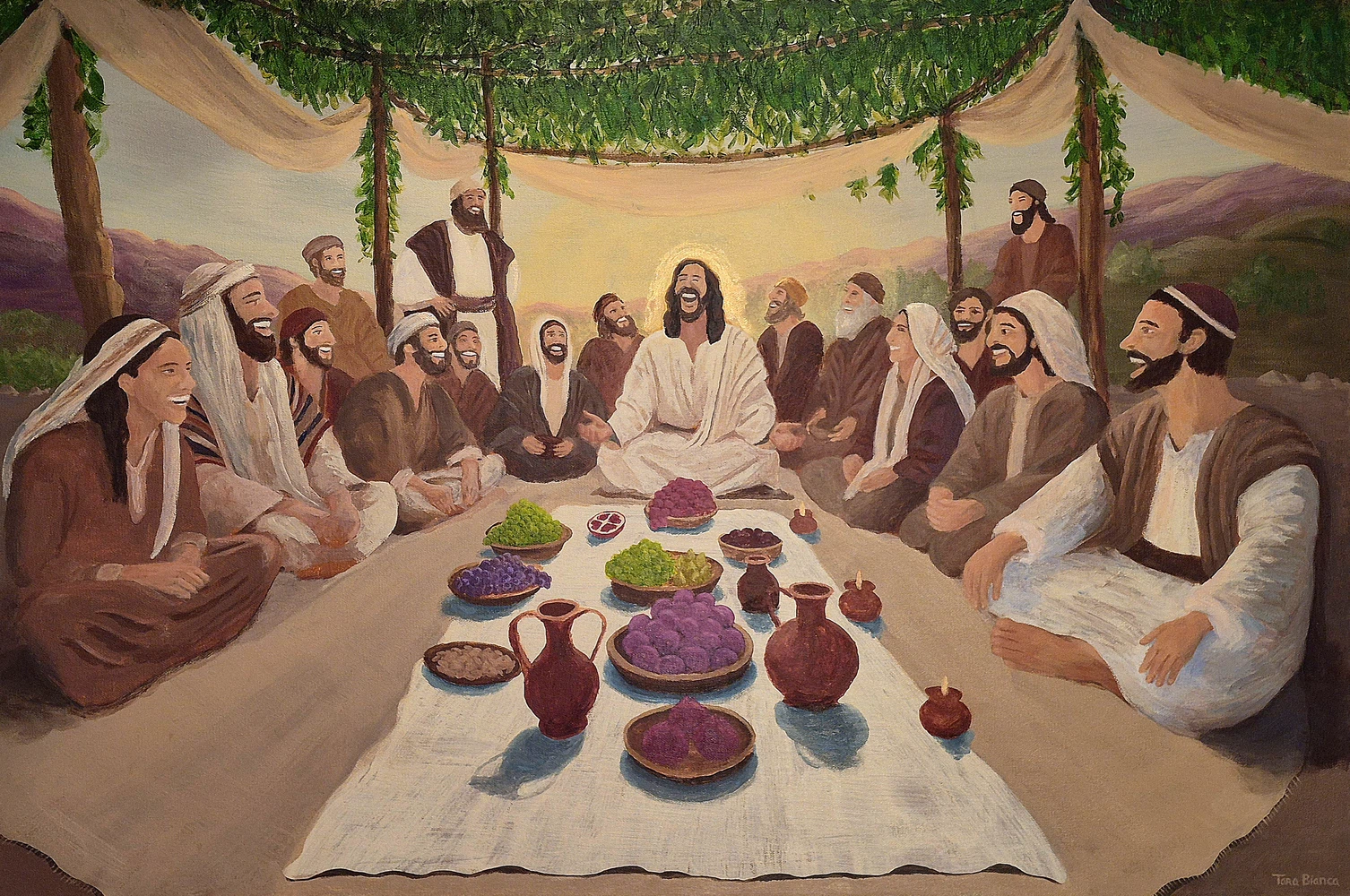
The Festival of Sukkot, also known in Scripture as the Festival of Booths or Tabernacles, has been practiced for millennia within Jewish communities as a weeklong harvest celebration, commemorating God’s provision and protection over his people in the wilderness. Every year, families construct a sukkah—a temporary booth or tent-like structure—in which they live for the week of the festival. In her ethnographic study of Sukkot observance in Tel Aviv, Gabrielle Anna Berlinger discerns: “The significance of the sukkah’s size was not measured by its numerical dimensions but by its capacity for hospitality.”1 She goes on: “The practice of hospitality lies at the heart of Sukkot observance, manifested in the custom of welcoming outsiders into one’s sukkah for food, drink, and rest during the week of the festival.”2 Unlike other Jewish feasts such as Passover (Easter) and the Festival of Weeks (Pentecost), Sukkot has not been appropriated by the Christian tradition, and therefore is unfamiliar to many contemporary Christians. The longer we meditate upon the Sukkot laws written in the Torah, however, the more we are drawn into a story of divine hospitality.
Just as tension is necessary to hold up the sides of a sukkah, the Festival of Sukkot is built around a theology of hospitality that holds in tension multiple themes. By counterbalancing these themes, the Festival of Sukkot turns a linear history from Creation to the Exodus into a multi-dimensional structure that honors humans’ multi-dimensional experiences of God.3 Past and present experiences that seem contradictory are brought together and allowed to push against each other; the tension between them becomes the force that holds up the sukkah, making space for the people of God to come and live within these structurally sound paradoxes. Living in a sukkah for one week each fall, the community learns to be more at home in the tensions they face every day, and they rehearse, in turn, a faithful response to both God and neighbour.
Though inseparable from each other, this essay will discuss in turn two contrasting themes—the abundance of Eden and the hevel of the wilderness—to discern the theology of hospitality inherent to the practice of Sukkot, before stepping inside the structure they build together. As we tuck into our Thanksgiving feasts this weekend, I hope that meditating upon the biblical roots of this festival—which took place just last week in the Jewish calendar—provokes the Church to think more creatively about the embodied ways we inhabit our theology. As we fill our tummies with turkey, may we chew upon the wisdom of our Jewish brothers and sisters and let the practice of Sukkot critique any understanding of God’s generosity that does not manifest in ourselves becoming a more generous, hospitable people in the process.
The Abundance of Eden
The first theme that the Festival of Sukkot celebrates is the abundance of Eden, brought eternally into the present through God’s generous hospitality. It is in this theme that God’s character as the cosmic host comes to the fore and illuminates the proper cultic and ethical response from his people who are guests in the land.
The Generous Host
Two pillars of Ancient Near Eastern hospitality—provision and protection4 —can be rightly seen as the core attributes of God that Sukkot highlights and celebrates, casting God in the role of the generous host of his people. Within the Pentateuch, the Festival of Sukkot aligns with the end of the agricultural season (Deut. 16:13; cf. Exod. 23:16). Storehouses are at their fullest and the whole community sets down their tools and begins to feast “because the LORD your God will bless you in all your produce and in all the work of your hands, so that you will be altogether joyful” (Deut. 16:15).5 As Peter Enns notes, “it is at these agriculturally significant times that Israel is reminded that all these gifts come from God.”6 This celebration of agricultural abundance reminds the people that God has once again, through a successful harvest, provided them with “wine to gladden the human heart, oil to make the face shine, and bread to strengthen the human heart” (Ps. 104:15).
Though Sukkot aligns with the agricultural calendar, this festival is also given a historic explanation in Leviticus 23:42-43: “All [citizens] shall dwell in booths, that your generations may know that I made the people of Israel dwell in booths when I brought them out of the land of Egypt: I am the LORD your God.” The scribe’s intention is clearly to overlay the memory of God’s protection in the wilderness over the already verdant significance of an agricultural festival. Each year of being comfortably settled in the land, the people are to ritually unhouse themselves so “that your generations may know” the experience of their ancestors’ homelessness and the experience of God’s protection as they traveled together through the desert’s inhospitable conditions (Lev. 23:43). This yearly unsettlement teaches each new generation that, whether they are in the wilderness or at the end of an abundant harvest season, they are held securely within the provision and protection of their generous host.
The Grateful Guests
As the symbolism of Sukkot reveals God to be the cosmic host, the rhythms of this festival, in turn, teach the Israelites what it means to be good guests in the land. The first response this festival elicits, and commands, is joyful gift-giving. Numbers 29:12-40 details the communal sacrifices to be offered on Sukkot, and the sheer number of them speaks to the magnitude of the celebration; “[i]ndeed, more bulls and rams are offered during Tabernacles than during the rest of the festivals of the year combined.”7 The bounty of sacrifices prescribed aptly reflects the bounty being celebrated at the end of the harvest season.8 As the law states in Deuteronomy: “Every man shall give as he is able, according to the blessings of the LORD your God that he has given you” (Deut. 16:17). This dynamic, wherein a person gives according to what God has given them, reflects the reciprocity expected within Ancient Near Eastern hospitality; the generosity of the host is mirrored and reciprocated by the generosity of the guests in the form of gifts.9 The cultic sacrifices prescribed during the Festival of Sukkot, therefore, become a medium through which the people rehearse reciprocity, learning to embrace a posture of joy, gratitude, and generosity—even at great cost—in response to God’s gracious hospitality.
Sukkot reinforces, however, that generosity toward God is inseparable from generosity toward your neighbour. All people, from the most secure in society to the least, are invited to participate in this weeklong communal feast, meaning that God’s abundance is to be shared equally among the whole community (Deut. 16:14). In Deuteronomy’s rendering of the Sukkot laws, this festival also takes on a close relationship with the Year of Release, where people are commanded to cancel debts and release slaves. The Festival of Sukkot happens each year once the people have “gathered in the produce from your threshing floor and your winepress” (16:13). The law then emphatically states that those who gather for this feast “shall not appear before the LORD empty-handed” (16:16). When the law commands the people to set their slaves free during the Year of Release, the law instructs: “And when you release them, do not send them away empty-handed. Supply them liberally from your flock, your threshing floor and your winepress” (15:13-14).10 These verbal links indicate that agricultural goods are to be shared with the vulnerable with the same liberality and generosity as the cosmic host who first provided them. The people yearly re-enact on Sukkot the story of God not leaving them empty-handed upon their release from slavery in Egypt; this same pattern then informs the way Israelites are to treat released slaves within their own community.11 Through ritually inhabiting the story of God’s hospitality in the wilderness during Sukkot, therefore, the people are learning to practice that same hospitality with others.
Resting in the Garden
As people enter the sukkah, however, a deeper past also comes to bear on the present. The symbolism of this festival, both temporally and materially, echoes Eden, rooting God’s hospitable character in the creation narrative. The patterns of seven framing the festival evoke this association. Sacrifices are offered in multiples of seven; the timing of the festival follows a seven-day pattern, bookended by two days of rest (Num. 29; Lev. 23:35-36). Through these patterns, God’s hospitality celebrated during Sukkot takes the shape of Genesis 1, when God first created a home for humanity marked by abundance and safety and ending in rest. Materially, the people are instructed to “take on the first day the fruit of splendid trees, branches of palm trees and boughs of leafy trees and willows of the brook, and you shall rejoice before the LORD your God seven days” (Lev. 23:40). Though what the people are to do with these materials is left ambiguous in Leviticus, the people returning from exile, at least, interpreted these laws to mean that these materials should be used in the construction of the sukkah itself (Neh. 8:15-16). There has been historic debate around how to understand and use “the four species” ritually, but the Samaritan tradition continues to practice Sukkot by using these materials in the construction of the sukkah.12 Laura S. Leiber explains the significance of this practice:
Samaritan tradition views the festival through the lens of the creation story in Genesis, and the Sabbath that falls during Sukkot is, at least in modern custom, called Shabbat Gan Eden, the Sabbath of the Garden of Eden. The abundance of the natural world is transformed, through the purest human craft, piety, and skill, into a symbol of the world restored. When one fulfills the Torah’s commandment. . . to sit in the sukkah, one dwells, however transiently, in Paradise.13
Leiber’s explanation beautifully captures the evocative, Edenic experience of constructing, dwelling, and ultimately resting in the sukkah, reminding the people of God’s primordial hospitality.
Together, the creational symbolism of Sukkot, combined with the historic explanation tying the ritual to the wilderness wanderings, overlays the stories of creation and redemption to highlight God’s hospitality as a consistent, eternal aspect of his nature. God’s desire from the beginning was to make a home where all of creation could dwell together in safety and all needs would be met out of the abundance of the garden. In humanity’s fallen state, Sukkot invites the people to inhabit the belief that God still chooses to extend that same creational hospitality into the wild present. Generosity flows out of God’s own initiative, but according to the principle of reciprocity it demands a response. The Festival of Sukkot, then, becomes a school where the community learns to be good guests in the land, reciprocating their host’s generosity cultically and communally with gratitude and joy.
The Hevel of the Wilderness
To this point, we have inhabited the joy of Sukkot, dwelling within the Edenic abundance that this festival experiences and celebrates. But this multivalent ritual highlights another dimension of the human experience: the hevel of the wilderness. Perhaps surprisingly for a festival so overtly commanded to be joyful, Ecclesiastes has been the liturgical reading on Sukkot within certain Jewish communities since medieval times.14 The central theme of this text—that life is hevel: vulnerable, ephemeral, transient—provides a helpful counter-testimony to the promise of Eden’s abundance, inviting us to consider more deeply the polygonal experience that the sukkah ritual would have elicited.
Though a cursory reading of Ecclesiastes seems to present an antithetical message to the joy of Sukkot, it paints a picture of the giftedness of life that in fact deeply resonates with the conflicting experience of hospitality in the wilderness. Wilderness life comes with the humbling awareness that all are sojourners within creation. Manna cannot be stored and will reliably perish the next day, neither will material possessions last after one’s death, eventually being passed on to strangers (cf. Eccl. 5:15-16, 6:2). These stark truths have an equalizing effect, as no person, regardless of their status, can escape these realities. The ritual of Sukkot likewise has an equalizing impulse that humbles all people before God. In Leviticus 23, the instruction to all that are citizens in Israel to construct their own sukkah “would have included those who were aliens and sojourners in the land.”15 The Hebrew word used here for “citizen” is relatively rare, however. In reflecting upon its use, Jewish scholar Jeffrey L. Rubenstein suggests,
The sukka exposes our true state: we are "sojourners" in the world, who come in naked and leave naked. This explains why the Torah uses the rare term "citizen" (ezrah), which the author [of Keli Yaqar] interprets to refer to temporary settlers rather than permanent residents. The commandment is directed to those who realize that they are but passing through the temporary world.17
During the festival, all people are temporarily displaced to remind the community that in God’s land all are strangers and sojourners first, dependent on God’s hospitality for survival (cf. Lev. 25:23; 1 Chron. 29:15). This fundamental equality runs deeper than Israel’s privileged position as God’s chosen people, laying the theological groundwork for an ethic of generosity towards the vulnerable outsider.
As the people yearly unhouse themselves to reside in temporary shelters, they are also re-confronted with their own vulnerability and contingency. At the moment when it would be easiest to forget the LORD because the people have eaten their fill of the harvest, Sukkot reorients the community back to their experience in the wilderness when they had no provision or protection independent of God’s initiative to host them during their sojourning. This ritual reinforces the narrative that “it is [the Lord your God] who gives you power to get wealth” and dismantles the false narrative that “[m]y power and the might of my hand have gotten me this wealth” (Deut. 8:17-18). Though Sukkot presents a strong critique against presumption, entitlement, and self-sufficiency, the fruit of recognizing one’s dependency on God is the freedom to then enjoy the gifts he does so generously give (cf. Eccl. 2:24-25). Under the sukkah, the remembered reality of the wilderness pushes back against the impulse to take Eden’s abundance for granted, but it does not diminish the full enjoyment of God’s good gifts. Rubenstein again aptly captures this dynamic:
[T]he sukka as a symbol of the impermanence of this world channels the joy of the festival in a specific direction. We rejoice not on account of material prosperity in this world, though that is surely reason to give thanks. . . . The joys of this world, like this world itself, are not unreal, but they are certainly fleeting and ephemeral. . . . Only divine protection transcends this world and endures in the next.18
Wilderness life is transitory and fleeting, disrupting any sense of entitlement to comfort or status over one’s neighbours. People are forced to recognize their inherent vulnerability and their constant need as sojourners for God’s daily hospitality. By experientially reminding people of these realities, the festival of Sukkot reorients the whole community to see God’s provision and protection as gifts and to treat their fellow sojourners with compassion and generosity in kind.
Conclusion: Building the Sukkah
By rehearsing each year a multivalent story of divine hospitality—rooted in creation and nuanced in the wilderness—the people of God ritually come to know their place as guests within God’s creation, cared for generously and abundantly by YHWH their host. Through the rhythms of joyful sacrifice, communal celebration, and remembered vulnerability, the people express their gratitude in reciprocal generosity to God and to the vulnerable in their community. This cultic ritual, therefore, shapes the community into the image of their hospitable host, developing an ethic of hospitality in which God’s generosity toward his people is reflected in their generosity back to God and to their fellow sojourners.
So as we prepare to give thanks for God’s generosity this weekend, may our rituals of gratitude invite us to remember that from the garden to the desert, the people of God have experienced what it means to be brought low and what it means to abound. We have faced plenty and hunger, abundance and need. Like our Jewish brothers and sisters, who yearly inhabit structures where they are reminded of God’s generosity and their own vulnerability, may we learn to be content in all circumstances through the God who gives us strength, who hosts us daily and gives us protection, provision, and rest. As we embody these realities around a Thanksgiving meal this weekend, may we be spurred on to make more room at our tables and be reminded to do for the least of these as God has so generously done for us.