Editor’s Note: this text was first delivered as a homily in Regent College Chapel, September 9, 2025.
As we start a new year of life and study at Regent College, I’m delighted that our chapel team has decided to focus on the “fruit of the Spirit” this semester. What could be more timely, more powerful, or more encouraging than reflecting together on how the life of the Spirit comes to expression in our own lives and in the life of our community? However, I’m sad to say that the “fruit of the Spirit” is an often-misunderstood topic within evangelical communities today. This is because we fail to see the primary context within which the Spirit’s work arises. And because of that, we’re prone to missing the core meaning and application of this profoundly important reality.
For the most part, we tend to think of the “fruit” of the Spirit as distinct or discrete manifestations or character traits distributed to individuals seeking personal growth, spiritual formation, or self-fulfillment—as if the fruit of the Spirit is another way of itemizing personal “strengths” or psychological traits. But such a view is too trivial. And it contradicts the basic facts of God’s work in the world. And because of that, it amounts all too often to just another expression of human autonomy and even idolatry, in which the false “god” is none other than the idol of our own self-improvement on the road to personal validation or actualization.
I’m not saying there is no value in understanding our own personalities or aptitudes or anything like that. Nor am I suggesting that there is no place for various diagnostic tools or models for gaining insight into our ways of relating to others or our vocational journeys. Those, no doubt, have their place and their contributions to make, but what I’m saying here is that the fruit of the Spirit is something fundamentally and importantly different than all of those. We need to view the manifestation of the Spirit’s life within a very different gospel frame. And that is what I hope to offer here, albeit very much in outline. I have seven headings or propositions to reframe our thinking about the fruit of the Spirit.
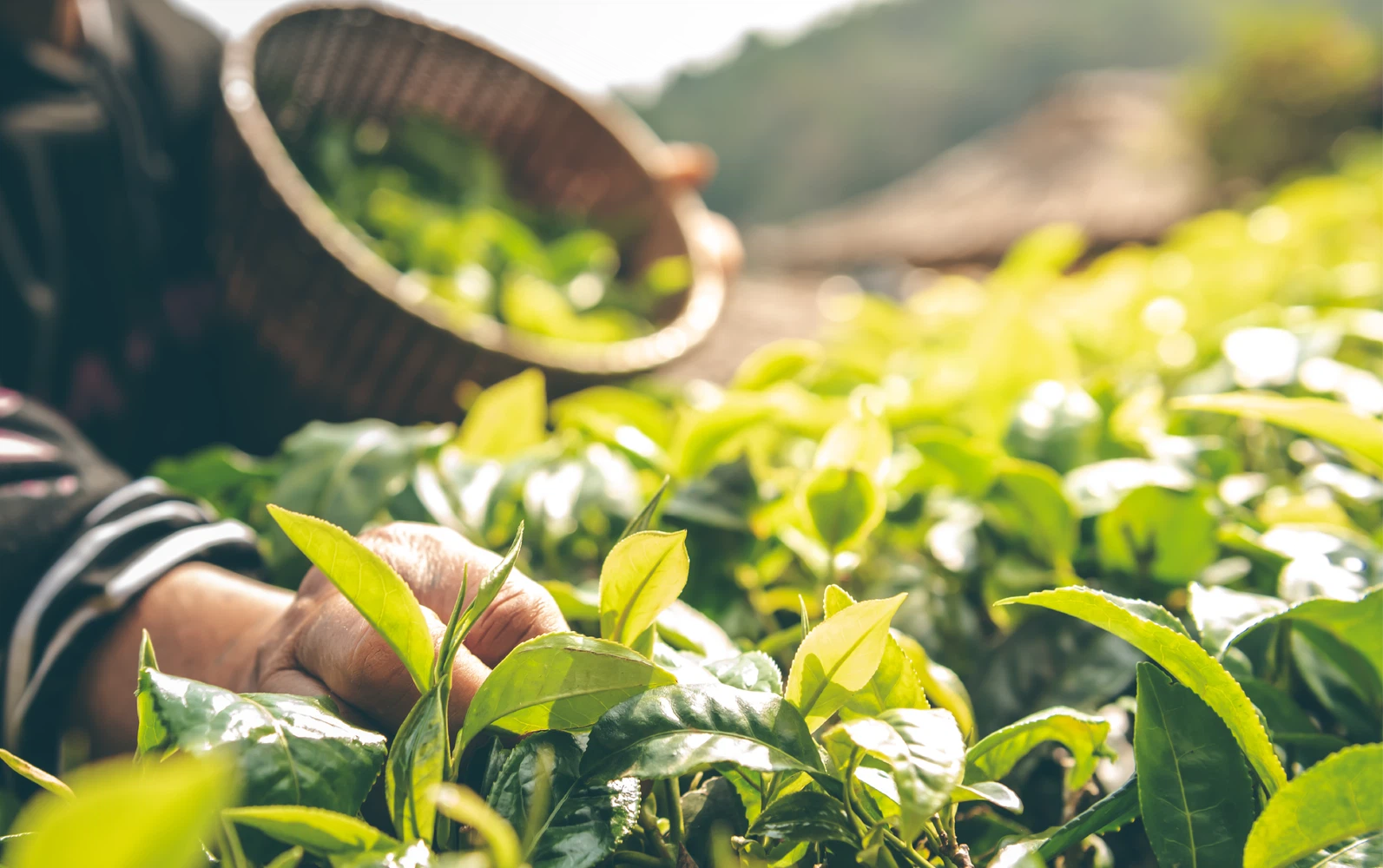
Firstly, we must replace the word “fruit” with the word “harvest” because that will put us on a much surer biblical footing. The Greek word karpos (καρπός) refers broadly to the produce of trees and vines—thus, naturally, “fruit.” But καρπός can also refer to the produce of a whole field or vineyard—thus, “harvest"—like with a grain crop that is grown over many months and gathered into barns at the end of the growing season.
And this is clearly the sense Paul has in mind in Galatians 5:16–6:10. Do you notice the references to sowing and reaping near the end of the passage? We’ll return to those towards the end. For now, I want us to see that the manifestations of the Spirit’s life arise out of the “organic” work of God in the world. God is the great farmer. And the harvest is coming! So, that’s the first point. Change “fruit” for “harvest.”
The second point is that the harvest of the Spirit is fundamentally eschatological. Indeed, all Christian theology worth its salt is eschatological. The harvest is a biblical way of talking about the coming to fruition of the Kingdom of God. Think of all the times that Jesus used the agricultural metaphors of sowing, reaping, and harvest time in his parables. And the book of Revelation does the same thing when it talks about the trampling of the grape vintage of God’s coming judgement.
The harvest of the Spirit belongs to the end of the age. Or, more precisely, the harvest of the Spirit points to the beginning of the-end-of-the-world and of the turning of the ages. And it speaks of the incursion—in-breaking—of the fertility of the future that has already taken root and is beginning to show itself like green shoots of new growth in the midst of the drought-stricken barrenness of the present age.
As such, the harvest is a sign. It’s a sign of the coming Kingdom and of what the Kingdom is like. It’s a sign of judgement of this world’s corrupt and shrivelled fruit, the so-called “works of the flesh.” So, the harvest is a measure of the gulf that stands between the present famine and the fulness of the age to come.
Thirdly, the eschatological harvest is not about individual fruits on solitary trees or vines. Rather, it is a crop. It is the product of a whole field. In other words, it is a communal or collective reality arising from the ubiquity of God’s presence and of his mission that covers the earth as far as the eye can see, from here to the horizon and beyond.
It is not just a collection of singular fruits filling the occasional basket or two. No, the harvest of the Spirit is a way of talking about what God is doing throughout the whole world. It’s about the arrival of God’s Kingdom in us all: both here and everywhere else. It’s something big, not small. But it’s not only about quantity. The harvest of the Spirit is the most beautiful and most nourishing the world has ever known. So, that’s my third point.
The fourth point is that the manifestation of the Spirit’s life in the world is unified. Multifaceted, variegated, and multi-form, yes. But still an integrated whole. It’s a unified reality flowing from the very heart and character of God. Thus, thankfully, even in our common English translations, we have the singular term “fruit” of the Spirit and not “fruits.” The fruit of the Spirit is: love, joy, peace, patience, kindness, goodness, faithfulness, gentleness, and self-control.
While we may experience these characteristics partially and incompletely in ourselves, the harvest of the Spirit is always all these qualities together—in ourselves as individuals to a greater or lesser extent, but more fully within the people of God collectively. God’s people the world over are known by their love, identifiable by their joy, distinguished by peace, characterized by patience, filled with kindness, and so on.
And that’s why, fifthly, the harvest of the Spirit forms the basis of all Christian community. Our life together is fundamentally different from the common life of any ordinary association, interest group, club, or political party. The harvest of the Spirit derives from the creative Spirit of God—the very Spirit who superintended and hovered over the creation of the world; the very one who raised Jesus from the dead, setting in motion the beginning of God’s new creation, of which Christ is the new and greater Adam.
This new human is the one whose character is being described when we list the “fruit of the Spirit.” Jesus is the one who models what it means to be loving, joyful, peaceful, patient, kind, good, faithful, gentle, and self-controlled. This is the mind of Christ. This is the life of Christ. This is the personality of Christ. This is the law of Christ. And so, the harvest of the Spirit is about the very person of Christ coming to expression in all of us, who belong to him and are being transformed into his likeness.
The harvest of the Spirit, sixthly, therefore, is irreducibly christological. It is the life of Jesus being manifested within the body of Christ, the Church. And this is just one of the places where what can be said about the fruit of the Spirit can also be said about the “gifts” of the Spirit. For, though distinct conceptually, the gifts too flow from the very being of Christ into his people who make up his body, the Church.
The gifts of the Spirit are distributed according to the needs of the church and of the world, with each one playing a distinct part for the building up of the whole. The harvest of the Spirit is a bigger reality, speaking of all the manifestations of the life of the Spirit coming to expression in our lives today. In that sense, the harvest or fruit of the Spirit is the more fundamental or foundational reality that we can expect to find expressing itself in all God’s people.
And so, we come finally to my seventh point, which is a return to the agricultural metaphor itself. And it’s here that our thoughts need to turn to the practical and the experiential. The harvest of the Spirit, while an eschatological work of God, and an instantiation of the life of Christ in the world, is also very much a matter of our participation and diligence. The harvest requires sowing and reaping, tending and watering, nurturing and pruning.
For, in this time of overlap between the present age that is coming to an end and God’s future which is already taking root and budding—in this time started by the resurrection of Jesus and empowered by the arrival of the Spirit on the Day of Pentecost, but during which the present age still hangs on to its last vestiges of dying life during this time of in-between—we are called to be co-labourers and co-cultivators with God. We are called to join with God in the work of tending and nurturing the harvest. For Paul says that we will reap whatever we sow.
This is an awesome and a sobering apostolic pronouncement! What we do, what we choose, and how we behave makes a profound difference to the coming of the harvest in our lives. We are called by God to participate in the work of bringing in the harvest, of seeing the Spirit’s work come to fruition in our own lives and in the life of our community. Do we wish to be loving, joyful, peaceful, patient, kind, good, faithful, gentle, and self-controlled? Then do the work, Paul says!
Do the work. The work of prayer, faith, attentiveness, repentance, accountability, and humility. And so, here we see at work a principle of spiritual cause and effect. For Paul says, “If you sow to your own flesh, you will reap corruption from the flesh, but if you sow to the Spirit, you will reap eternal life from the Spirit.” We are called to participate in the transforming work of God—a work that has both positive and negative aspects: we will see the fruit of the Spirit—the harvest of God—when we sow seeds that foster the life of the Spirit in our lives, and when we root out like weeds those aspects of our lives that pander to and foster all those things that don’t align with the life of the Spirit. Paul calls them “the works of the flesh” (Gal. 5:18) and he says they are obvious for all to see: sexual immorality, impurity, debauchery, idolatry, sorcery, enmities, strife, jealousy, anger, quarrels, dissensions, factions, envy, drunkenness, carousing, and things like these.
We may not like to have such matters mentioned in polite society. And that’s as it should be. But there is a hard-edged realism to Paul’s pastoral counselling. He says, “Those who do such things will not inherit the Kingdom of God” (Gal. 5:21). And again, a little later: “If you sow to your own flesh, you will reap corruption from the flesh” (Gal. 6:8).
And so, dear friends, these are matters of great importance for us to ponder. How will we sow to the Spirit in these times? How will we nurture the green shoots of the coming harvest so that the fruit of the Spirit may be ever more in evidence among us? And what works of weeding and cultivating do we need to engage in as a matter of urgent importance?
Paul’s final pastoral advice is very simple, calling for diligence, constancy, and resilience: “So let us not grow weary in doing what is right, for we will reap at harvest time, if we do not give up” (Gal. 6:9).
May God give us all grace to keep doing what is right until the harvest comes.