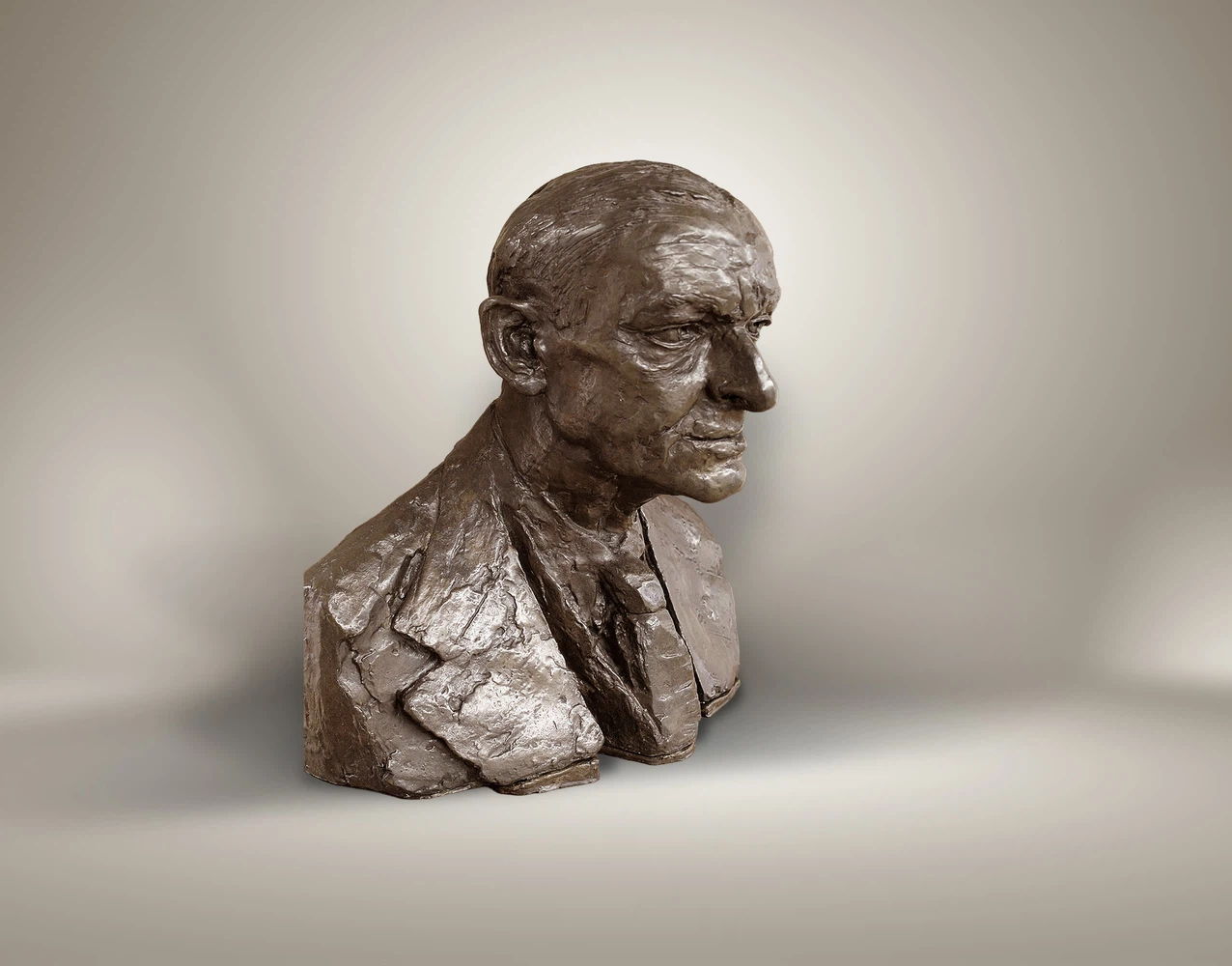
Note: This article originally appeared in the Spring 2014 issue of CRUX (Vol. 50, No. 1).
Back in the 1980s, while I was still working on my doctoral dissertation at Oxford University, rather to my surprise I landed a job as a radio producer, making programs for the BBC’s religious broadcasting unit. I had thought that I was preparing for a life teaching theology in a university or college context, but at this point an entirely different career path opened up for me.
Before I left the dreaming spires, my academic supervisor said something to me that I have never forgotten. He was a great man to whom I will always be grateful for his guidance and generosity. But on this occasion he told me that he was sorry to be losing me to the entertainment industry—and he said those words with the sort of disdain that only an Oxford academic can muster . . . the entertainment industry.
He was clearly not impressed with the direction my life was taking, and in this he was not alone, academically or spiritually. In academic circles—then as now—media and popular culture were commonly dismissed as shallow and superficial, a major part of the problem, whatever the problem was, rather than part of the solution.
As a fledgling producer, I read the theories of people like Neil Postman and his powerful critique of electronic media in Amusing Ourselves to Death (1985). Indeed, I even made a couple of programs with him about it. The irony of this wasn’t lost on Postman, although he seemed to justify the oddity of what we were doing on the grounds that, at least this was radio, not the demon television, and that we were making these programs for the BBC, which he tended to view as something of a case apart.
And then coming in like a pincer movement, as it were, were the opinions of many people in the churches who viewed the media and popular culture with grave suspicion as decadent and godless, and a dangerous, if not impossible, arena for Christian life and witness.
The books and ideas of Francis Schaeffer and Hans Rookmaaker were quite influential at that time, and while Rookmaaker in particular had plenty of good and important insights about the arts, the very title of his best-known book proclaimed an integral link between Modern Art and the Death of a Culture (1970).
Even a well-known and openly Christian media professional like Malcolm Muggeridge offered little help at this point. Muggeridge was one of the first real stars of television in Britain, and he made a number of remarkable films, including Something Beautiful for God (1969), which brought Mother Theresa to an international audience. But he became one of television’s fiercest critics, and in the 1970s he gave a series of public lectures at All Soul’s Church, Langham Place—right next door to the headquarters of the BBC in London—in which he castigated television as a purveyor of fantasy, an opponent of truth, uniting humanity around all that is trivial and transitory in our existence.
The lectures were later published as Christ and the Media (1977), but they offered precious little encouragement to someone just setting out in the business. As far as Muggeridge was concerned, the media constituted a fourth temptation that Jesus and his followers were bound to resist. The most positive image that he could conjure up to describe his own work in television was that of a piano player in a brothel, who occasionally throws in “Amazing Grace” or “Abide with Me” in the vain hope of edifying the clients. Witty! But hardly a solid or inspiring basis for a creative, Christian engagement with the culture.
Whichever way one turned, it was hard to escape the sense that the contemporary arts and cultural scene were shallow and death-dealing, and that to work within them was massively problematical. While I certainly didn’t altogether buy these negative critiques, I can’t say that I found it easy or comfortable trying to frame my work in Christian terms.
From The Waste Land to Ash Wednesday
Shall these bones live? There have been times in my career in radio and television when I have seriously doubted it. The famous question from Ezekiel’s prophecy (Ezek. 37:3) seems guaranteed to provoke skepticism and incredulity: the valley is, after all, full of dry, dead bones. But however unlikely it may seem, the question is full of hope and possibility. It features in an important section of T. S. Eliot’s poem Ash Wednesday, and, both this poem and even more so the day in the Christian calendar after which it is named, have come to mean a great deal to me as I have struggled to understand my own vocation and to think through the relationship between the arts and Christian faith and identity.
Eliot’s Ash Wednesday, which appeared in 1930, marks an important turning point in his life. Eliot was already a celebrated poet. An American citizen who had settled in the United Kingdom after studying in Oxford, he made his name as an avant-garde poet with The Love Song of J. Alfred Prufrock, published in 1915. But it was The Waste Land of 1922 that rocketed him to literary fame. The Waste Land was seen then, and still is today, as a great poem and one of the defining works of the modernist movement in the arts—classed alongside pieces by Picasso, Stravinsky, and James Joyce.
Published in the aftermath of the devastation of the First World War, The Waste Land is dominated by images of fragmentation, futility, and fear. From the very outset, death hangs over this poem. The original epigraph that Eliot provided was from Joseph Conrad’s novel The Heart of Darkness—“The horror! The Horror”—a quote that showed up decades later in Frances Ford Coppola’s flawed masterpiece Apocalypse Now (1979). At the urging of Ezra Pound, Eliot changed it to a quote from the Roman writer Petronius—intimidatingly in Latin and Greek. But, in whatever language, there is no getting away from the morbid tone of this either:
Nam Sibyllam quidem Cumis ego ipse oculis meis vidi in ampulla pendere, et cum illi pueri dicerent: Σιβυλλα τι θελεις; respondebat illa: αποθανειν θελω. (For with my own eyes I have seen the Cumaean Sibyl hanging in a jar, and when the boys said, “Sibyl, what do you want?” she answered, “I want to die.”)
The Sibyl—an oracle of the ancient world—promised to have sex with the god Apollo in return for a long life—as many years as the grains of sand she held in her hand. But when Apollo granted her request, she refused to lie with him—so he condemned her to a terrible aging process, withering and shrinking till she was kept in a jar, without being able to die. This is one of the meanings from Eliot’s great line in the poem—“I will show you fear in a handful of dust” (line 30). The terrifying thing for her is to be condemned to life under these conditions—compelled to live at all.
The Waste Land is a poem of fragments—bits of Ovid, Dante, Shakespeare, Wagner, overheard conversations, snapshots from contemporary life. And what Eliot seems to be doing through these fragments is drawing attention to the fragmentation of life itself—to a place and time which knows only “A heap of broken images, where the sun beats / And the dead tree gives no shelter, the cricket no relief / And the dry stone no sound of water” (lines 22–24).
A heap of broken images . . . The phrase seems prophetic of the twentieth century, of our times. Many people have pointed out the cinematic or televisual nature of Eliot’s poem—scenes hard cut against each other, image piled upon image, but only half grasped, half observed, and without any context or continuity or narrative.
Eliot’s Waste Land is a place of unreality and hopelessness. Various destinations are mentioned, but there is no journey here, no trajectory. This is a world far removed from Chaucer’s Canterbury Tales. Pilgrimage has been replaced by tourism. But in Eliot’s bleak vision there is really nowhere to go. He presents us only with isolated and nightmarish episodes in a world deprived of hope:
Here is no water but only rock
Rock and no water and the sandy road
The road winding above among the mountains
Which are mountains of rock without water.
(lines 331–34)
The world as a desert of the soul—lifeless, barren, parched, with no sign of relief; modernity as a waste land, incapable of nourishing the spirit, starved of purpose and meaning.
It is a despairing vision that Eliot presents in The Waste Land. Where is there to go after this? What is the point of poetry? What is the point of life itself? The amazing thing is that T. S. Eliot did find somewhere to go—he did find a way to continue his poetry. And he found it in the Christian faith. In 1927 Eliot was accepted into the Anglican Church—and the first poem that he published after his conversion was Ash Wednesday.
I think it is truly remarkable that Eliot should have chosen to write about this day. It must have come as a real shock—and surely a major disappointment—to many in the modernist movement. He could hardly have chosen a more potent way of drawing attention to his conversion: the very title of the poem conjures up an image of Eliot, former leader of the avant-garde, kneeling humbly to receive a primitive and very visible sign of his new faith.
Ash Wednesday is a highly symbolic day. It is the first day of Lent, the forty-day period leading up to Easter that, since the early church, has been observed as a time of penitence, fasting, and spiritual preparation. Lent is a yearly remembrance of Jesus’s journey toward Jerusalem and the cross. In commemorating his journey, Lent, therefore, also symbolizes the journey of the Christian life—the turning to Christ and the willingness to renounce self, to “bear the cross,” and to trust in him.
The church tradition in which I was raised didn’t place much emphasis on Lenten observance. But over the years I have grown to love the ancient liturgy for Ash Wednesday in which the minister marks the head of believers with a cross of ashes and says to them: “Remember that you are dust and to dust you shall return. Repent and believe the good news.” Because of the association of Lent with fasting and penitence—and the fact that similar words to these—“dust to dust, ashes to ashes”—are used in the funeral service, it is easy to dismiss the Ash Wednesday liturgy as rather a dour and depressing affair. But that is a real mistake, I think.
I believe that this practice of the Christian church—both the words said and the action of marking with ashes—is filled with promise and hope. It provides a powerful way of viewing the Christian life and, more particularly, of thinking about Christianity’s relationship with the arts.1
Ash Wednesday—Marking Our Creatureliness
The words “Remember that you are dust” take us right back to the early chapters of Genesis and to crucial texts for understanding the biblical view of creation and the person. We tend to hear them first and foremost in the context of the curse in Genesis 3:19, God’s words to Adam and Eve as they are ejected from Eden: “By the sweat of your brow you will eat your food until you return to the ground, since from it you were taken; for dust you are and to dust you will return.”2
But the primary frame of reference here is not and cannot be human sin. In the first instance, Ash Wednesday is a call to remember that we are creatures made by God. Genesis 2:7 tells us that “the Lord God formed a man from the dust of the ground and breathed into his nostrils the breath of life, and the man became a living being.”
Human beings are thoroughly material in their origins—from the earth, as Adam’s name implies: from the humblest, seemingly most basic form of matter, the dust of the ground. We are dust-people, earth-people, who are subject to all the realities and limitations that that brings. And just like everything else in creation, we are totally dependent on God. Earthiness, physicality, is not a mistake, not a product of our fallen-ness. It is entirely proper to human existence. As Karl Barth puts it, “Man does not possess but is that which he is fashioned out of the earth.”3
It is remarkable that, although the Ash Wednesday service calls on us to remember that we are dust, in the first instance, according to Scripture, this is something that God remembers, and this is the source of our hope. Psalm 103 tells us that, “as a father has compassion on his children, so the Lord has compassion on those who fear him; for he knows how we are formed, he remembers that we are dust” (vv. 13–14).
So, lowly, threatened, frail though dust may be, this is how we were made by God. The body is not a prison from which to seek escape. It is the gift of our life, the very condition of living as a creature before God in the world that he has made. And if the body is not a prison of the soul, neither is the earth a wasteland, a zone of unreality. For “the earth is the Lord’s, and everything in it, the world, and all who live in it” (Ps 24:1).
Ash Wednesday points us back to the creation, marking our creaturely identity. And this is something that the arts, too, can do and should do.
For me, the work of Vancouver artist Grace Tan certainly has more than a touch of Ash Wednesday about it. In a 2013 show at the Dal Schindell Gallery at Regent College she presented a series of portraits of men who “strive to walk faithfully and courageously in their unique pilgrimages.” Among them was the great Dal Schindell, no less, magnificent in blue bow-tie! And there was something very moving about all of them—strength and vulnerability, serenity and pain, intellect and spiritual intensity, youthful confidence and the struggle for air. Fittingly, many of Tan’s portraits were done in charcoal, the medium of Ash Wednesday. They are a striking reminder of our common creaturely existence—human beings as “breathed on dust.”4
Threatened though it is by corruption and death, there is a substance and a reality that rightly belongs to the created order. The Bible shows us dignity, not fear, in a handful of dust. For me this is the most striking thing that Eliot discovered through his conversion to Christ and that he began to explore in his poem Ash Wednesday.
The world of Ash Wednesday is most definitely not a wasteland. It may at times be a hard and rocky place—a wilderness, if you like—but this is not an unreal city populated by the living dead. For even here, says the poet, “among these rocks,” one may pray confidently and seek “Our peace in His will.”5
Unlike The Waste Land—where there is nowhere to go and no reason for going, there is a journey, a pilgrimage right at the heart of this poem. The Canadian literary critic Northrop Frye has written that Ash Wednesday “presents us with a desert, a garden, and a stairway between them.”6 Things happen on this journey up the stairway—there are disturbing sights and sounds, energies to be expended, perils to be avoided. There is a struggle going on “with the devil of the stairs who wears / The deceitful face of hope and of despair”7—but these are not meaningless skirmishes. This is a world in which there is risk. Something is at stake. The journey matters. For the destination is the garden “where the fountain sprang up, and the bird sang down,”8 and “where all loves end.”9 It is the place of renewal, of replenishment. But it is still to be finally reached and attained, and so the journey continues:
The desert in the garden the garden in the desert
Of drouth, spitting from the mouth the withered apple-seed.10
One of the toughest lessons I have had to learn in my life and career is not to be afraid of art and beauty and the embodied nature of our lives, but, on the contrary, to rejoice in them, to revel in time and place and the wonders of creaturely existence. I have had to learn—and I am still learning—not to share my supervisor’s contempt for the entertainment industry.
The fact is that on occasions I have been as guilty of a faithless analysis of contemporary life as the most extreme modernist or postmodernist. That is a real and abiding danger for Christian intellectuals and indeed for an institution like Regent College. We can gain the whole world of theological analysis and critical theory, and lose our creaturely souls. Do we really believe that this is God’s world and that he remains actively involved with it? Are we able to live joyfully, fearlessly, creatively as his creatures within it?
Ash Wednesday—Confronting Our Reality
As well as marking our creatureliness, Ash Wednesday presents an uncompromising picture of human reality. Remember that you are dust and to dust you shall return. We are mortals. Death is the universal human reality—it confronts us all. Sin and rebellion in one form or another characterize all of our lives. And so the words of Genesis are combined with the proclamation of Jesus in Mark 1:15—“Repent and believe the good news!”
Repentance—metanoia—turning is the very essence of Eliot’s Ash Wednesday poem:
Because I do not hope to turn again
Because I do not hope
Because I do not hope to turn
Desiring this man’s gift and that man’s scope
I no longer strive to strive towards such things.11
Eliot is a relatively recent convert to the Christian faith. He has turned to God from the world—“the vanished power of the usual reign”12—but he is realistic about what he has done. He knows that he shouldn’t mourn his old life—the world he has renounced. He shouldn’t have any regrets, but he does. What has he done? What has he left behind? He doesn’t want to return to his old ways—he doesn’t want to “affirm before the world and deny between the rocks”13—but he might. This tension, this sense of struggle, never goes away from him throughout the poem.
The poet has to find out the truth about himself and the truth about the world through a continuing process of reflection in the light of his faith—what matters and what doesn’t, what is to be loved, and what isn’t, what will last and what won’t. And so he prays at the beginning and at the end of the poem—
Teach us to care and not to care
Teach us to sit still.14
In a wonderful reflection on these lines published in Crux back in 1992, Eugene Peterson says that this prayer is “imbedded in the experience of conversion to the Christian way.”15
We begin with a realization of our poverty. We do not know how to care. What we have been prayerlessly engaged in and glibly calling care is not care. . . . And the prayer “Teach us to care” is balanced by the prayer “Teach us not to care.” In the business of caring there is something we need to learn how to do, but there is something also that we need to learn not to do. What we learn not to do is just as important as what we learn to do.
As Eliot had come to realize, this true understanding of human reality is intimately bound up with Ash Wednesday.
Walter Brueggemann describes the Ash Wednesday service as a “powerful moment of liturgical confrontation.” He suggests that the marking with ashes, together with the words that are addressed to each believer, “combine and conspire with a piercing force to make this moment laden and dangerous. It is a moment of confrontation, of combat and assault, in which a battle is waged for my identity.”16
The imperatives—“Remember! Repent!”—are intended to “counteract our massive forgetting”17 and call us to a new way of living. And so, says Brueggemann, on Ash Wednesday
- a world of memory meets the world of consumerism
- a world of creatureliness counters the world of autonomy
- a world of fidelity impinges upon the world of homelessness.18
There is inevitably a priestly aspect to the work of any Christian. In pointing back to creation and reminding ourselves and our communities of the heart of our identity as human beings, we are exercising a priestly function. But, as Brueggemann points out, there is also an unavoidably prophetic dimension to Christian existence: we are called to “mark” our reality, to confront the world with the truth about itself—for its own good, its peace and welfare.
Ash Wednesday confronts our reality. And so, too, can works of art and the imagination. Indeed, I think there is a special calling on artists to confront reality in all its complexity—expressing our questions, anxieties, anguish, yearning, fear, and to do this uncompromisingly, honestly, without illusions. Great art does this, doesn’t it?
A few years ago the composer Janet Danielson wrote a piece of music that received its world premiere in the Christian Imagination class here at Regent. I had asked her to lecture on contemporary music and particularly the challenge of writing music after the great human catastrophes of the twentieth century: how does music deal with Auschwitz and Hiroshima, genocide and concentration camps, torture and staggering inhumanity? How can there be beauty and joy in a world of such violence and ugliness?
Much to my amazement Janet wrote a piece especially for us, which we were privileged to have performed for us in class. It is called Keening and it is certainly music that wrestles with the realities of our world. It takes seriously the dissonances of life as we experience it—the disruptions, the disharmonies, the absences. But however real and terrible these things may be, in her music Janet presents them not as the last word, as it were, but as cries of the heart, conflicts in search of resolution.
Artists are called to tell the truth about the world.
Ash Wednesday—Marking Our Hope
Ash Wednesday is the beginning of a momentous period that culminates not in a death on Good Friday—although it certainly includes it—but with a resurrection on Easter Sunday. It is utterly aware of the realities of the human condition, aware of our fallenness, our lust for power, but it doesn’t leave us there. It points to the living God who is our hope.
In the Ash Wednesday service the gospel is carved on our skin. We are told who we are and where our hope lies. That cross of ashes with which the priest marks the believer is not a morbid indication of death and corruption but a lively sign of faith and hope. Remember that you are dust—certainly. But remember too that you belong to Jesus Christ. And this is what Paul says in Romans 6:3–4:
Don’t you know that all of us who were baptized into Christ Jesus were baptized into his death? We were therefore buried with him through baptism into death in order that, just as Christ was raised from the dead through the glory of the Father, we too may live a new life.
The very centre of Christian hope and identity is Jesus Christ.
In Eliot’s Ash Wednesday there is hope, and it is explicitly rooted in Christ—“the Word without a word, the Word within / The world and for the world.”19 I think the poem is an attempt to address the meaninglessness of The Waste Land, particularly with respect to the fragmentation of the self and of history. For despite itself, despite its frenzy and fragmentation, the world has a centre:
And the light shone in darkness and
Against the Word the unstilled world still whirled
About the centre of the silent Word.20
This is Eliot’s extraordinary confession at the heart of Ash Wednesday, and it marks the decisive break with the despairing modernism of The Waste Land. However much he may be aware of the fragility of his conversion and the decision he has made, Eliot’s art has indeed also turned in an entirely different direction.
“Shall these bones live?” Eliot asks in his poem. It is a legitimate human question, and Eliot’s confession of faith in Ash Wednesday provides his own answer. But in the poem, as in the prophecy, “Shall these bones live?” is actually God’s question. And the prophet can only reply, “Sovereign Lord, you alone know” (Ezek. 37:3). God alone can animate the skeleton. God alone can raise the dead. Breath and life and hope are not in our gift—which means that at every moment to be a human being is a wondrous and risky business.
The sculptor David Robinson, whose work has been exhibited many times at Regent College, produced a remarkable symbol for the inauguration of the Eugene & Jan Peterson Chair in Theology and the Arts: Chair. Suspended above the atrium, it showed a man hanging on for dear life to a chair that seemingly had a mind of its own—an apt image if ever there was one for this professorial installation.
So many of Robinson’s figures seem to be at the tipping point—negotiating a tightrope, fighting to remain astride a bucking horse, teetering on the edge of an abyss, struggling to remain upright on an ever-turning globe, defying gravity—but only just. They bear witness to the wonder, exhilaration, and sheer unpredictability of human life. For me they represent the truth of what Jesus spoke about in the Sermon on the Mount and which Bob Dylan tried to express in his great song, “Every Grain of Sand”:
I am hanging in the balance of the reality of man,
like every sparrow falling, like every grain of sand.
In Robinson’s sculptures it seems that, just as the dust of the earth is remembered, so the balancing, tottering figure is somehow being held.
I think this is one of the reasons why the story of Jesus continues to appeal to apparently secular people. Here is the man, par excellence, whose life hangs in the balance, who teeters on the edge before falling into the abyss, whose end appears to be tragic and final. And yet through the whole of his story there is an intriguing sense of purpose and destiny and the suspicion that somehow or other, his life holds the key to our own.
Ash Wednesday encourages us to hope. So, too—sometimes despite themselves and the intentions of the artist—do works of art and the imagination. But are we people of hope? Shall these bones live? In the arts and media and popular culture? In the entertainment industry?
Maybe my supervisor was right in at least trying to warn me about what was to come. Because in many ways it has been a tough road—years when I couldn’t get commissions for the ideas I really believed in, when I felt that I was banging my head against the wall and getting absolutely nowhere, when I felt becalmed and thought, “What’s the point, what am I doing here?”
Some of this was undoubtedly due to the very secular context I was working in, and the challenge of operating as a Christian within it. And there is no getting away from that. But this is essentially no different to the challenge of being a Christian in any walk of life. And whoever said that following Jesus was always going to be a bed of roses?
But over the years I have learned that it is too easy to blame someone or something else—“the world,” “secular culture,” or those godless people in charge. Some of my problems and frustrations were very much of my own making. And chief among them was a lack of faith and of Christian imagination—a failure to see God at work in the world that is his. What I want to say now—not so much to my old academic supervisor, but to students, to colleagues, and to the wider community of Regent College—is this, and I want to say it with as much conviction as I can muster: the world is not a waste land. This is God’s world where we are called to love and serve and bear witness to Christ.
I have been given amazing opportunities in my life to tell stories to large audiences, to meet ordinary people who have had extraordinary experiences that have changed their lives, to work with brilliant professionals—many of whom were atheists and agnostics—who have taught me so much about beauty and truth-telling and vision. God has been at work. I have come to see that art certainly does not have to be explicitly Christian or evangelistic or moralistic—not at all. That would be to limit our humanity and misunderstand God’s relationship with the whole of creation. But I am convinced that Christian artists and the Christian imagination must be deeply immersed in the Christian narrative—shaped and marked by an Ash Wednesday faith.
In Eliot’s Ash Wednesday we see an imagination that is in the process of being profoundly shaped by the Christian story—a vision of life as a pilgrimage, a journey. It is marked by humility, knowing its own need, and the emptiness of the self when left to its own devices. And it is gripped by a conviction that the whole of reality is underpinned and sustained by a gracious life-giving presence—“the Word within the world and for the world, the Word against which the unstilled world still whirls.”21
My prayer for the arts here at Regent College is that our work and vision will be marked by creatureliness, reality, and hope—that the sign of Ash Wednesday will not just be placed in temporary fashion on our heads but will be inscribed deeply in our souls. This is a matter of our identity—of who we are and whose we are. And in this we can and should take our place joyfully and confidently in the world. Our work will, to a greater or lesser extent, always create a degree of disturbance—particularly in a society that claims to have shaken off the shackles of God. But because the game isn’t over—because we are held, mercifully, in a world where love and meaning and truth and beauty still exist—we can be confident that it will also be recognized and appreciated.